
Just a quick heads up: this website contains affiliate links, so I earn from qualifying purchases, which helps support this blog.
Afro boho decor that looks collected, not costume-y? That’s the hard part. The best rooms mix African textiles, earthy colors, and natural materials in a way that feels like you’ve been gathering things for years.
Afro Boho Bedroom That Feels Lived In
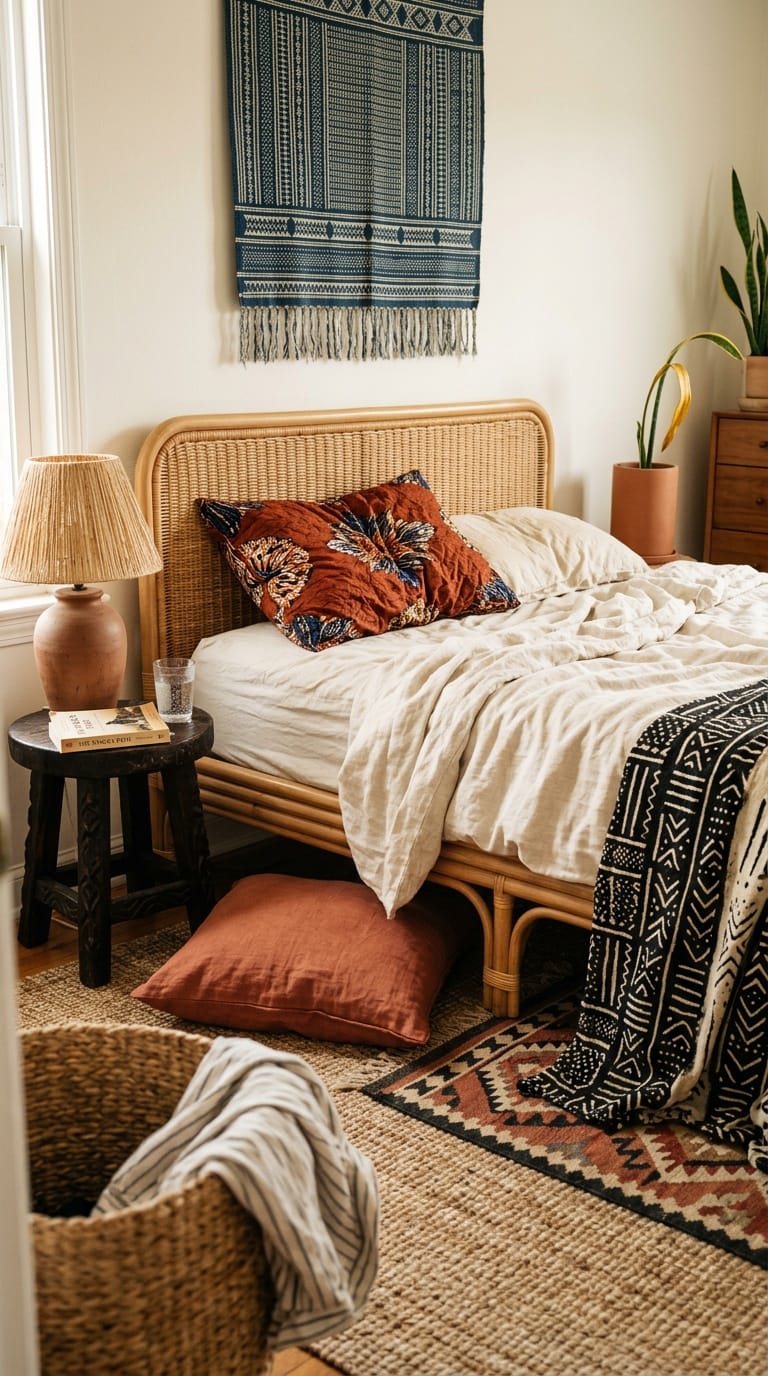
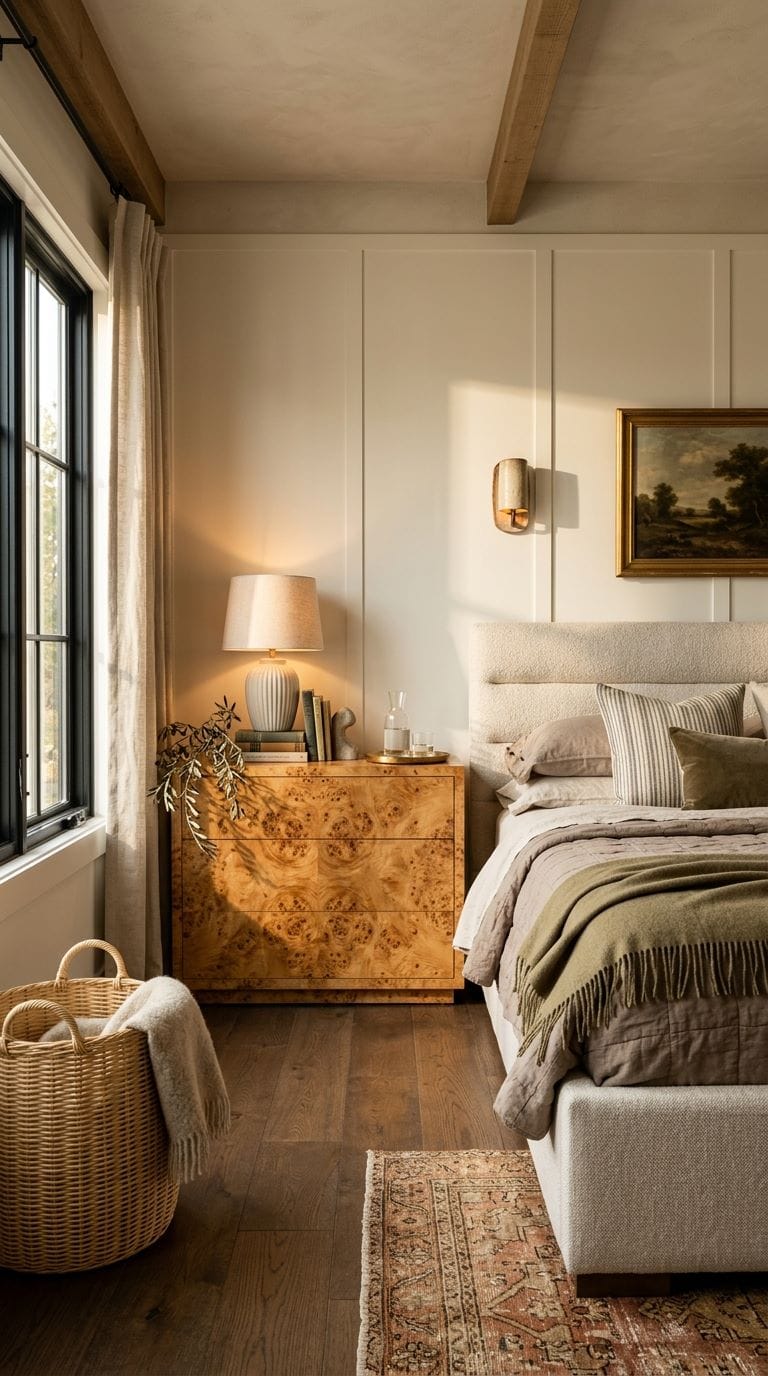
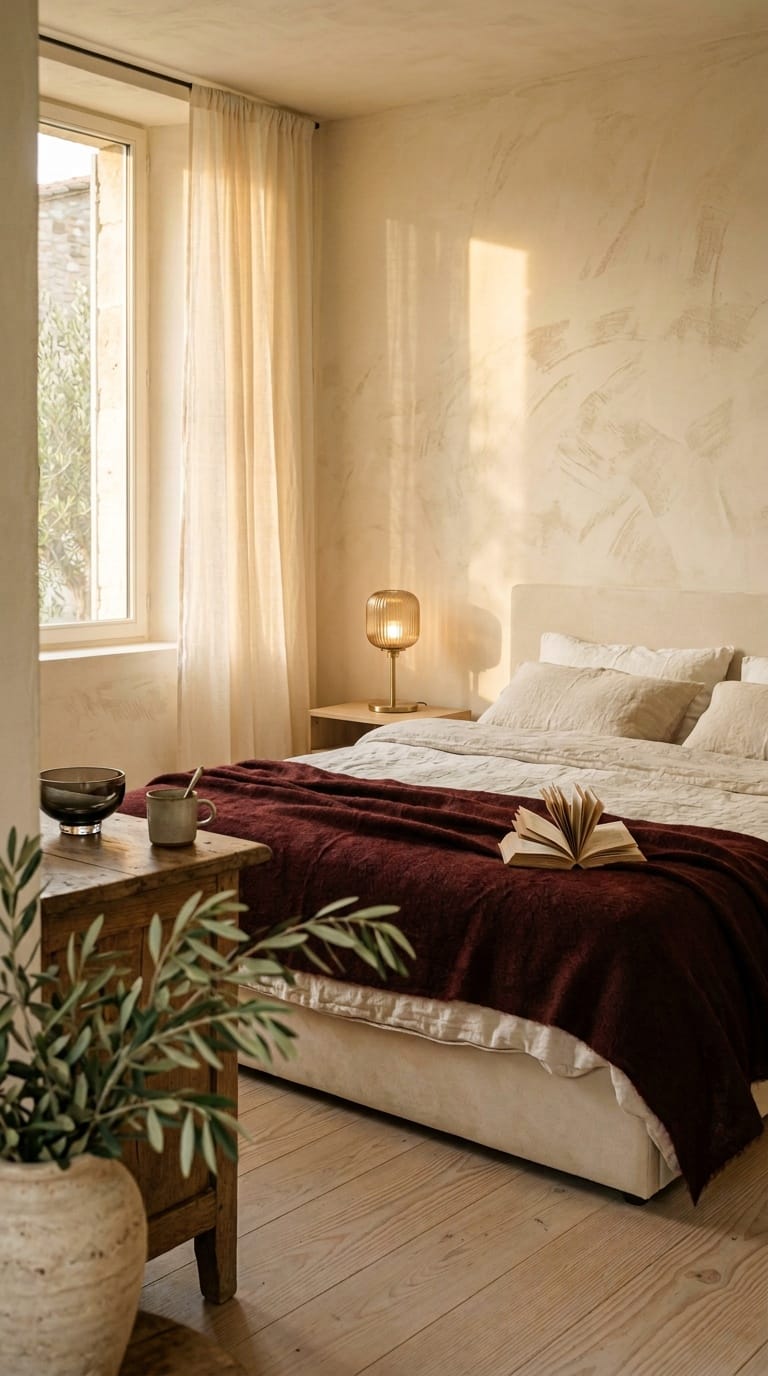
Start with the bed. A mudcloth throw across the foot, two or three pillows in different sizes. One Ankara print, one solid rust, one woven. Skip the matching set. A carved wood headboard or a rattan frame grounds the whole room. Keep the nightstand simple: a clay lamp with a woven shade and one book stacked sideways. The floor wants a layered rug. Jute underneath, a smaller ethnic-print rug on top.
Best for: Bedrooms where you want warmth without painting the walls. Textiles do all the heavy lifting.
Afro Boho Living Room Done Right
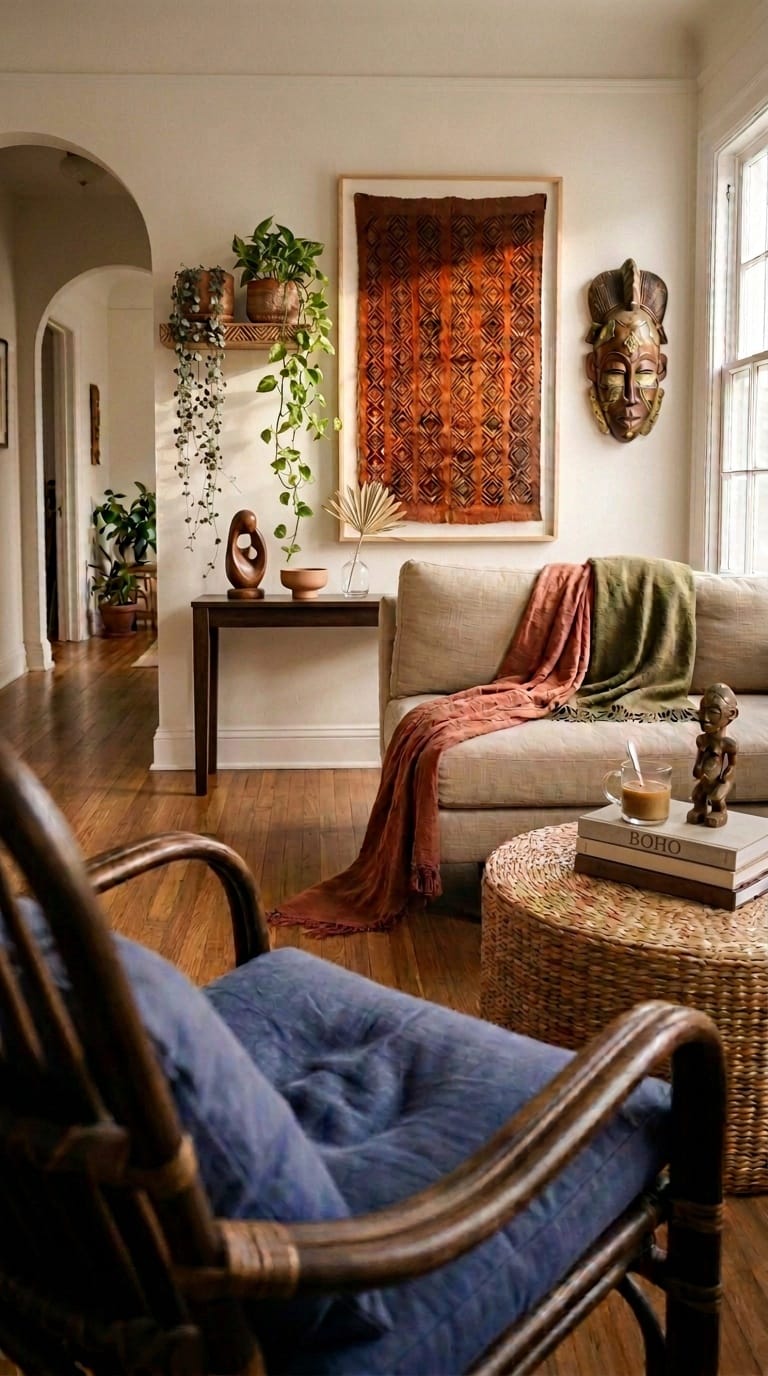
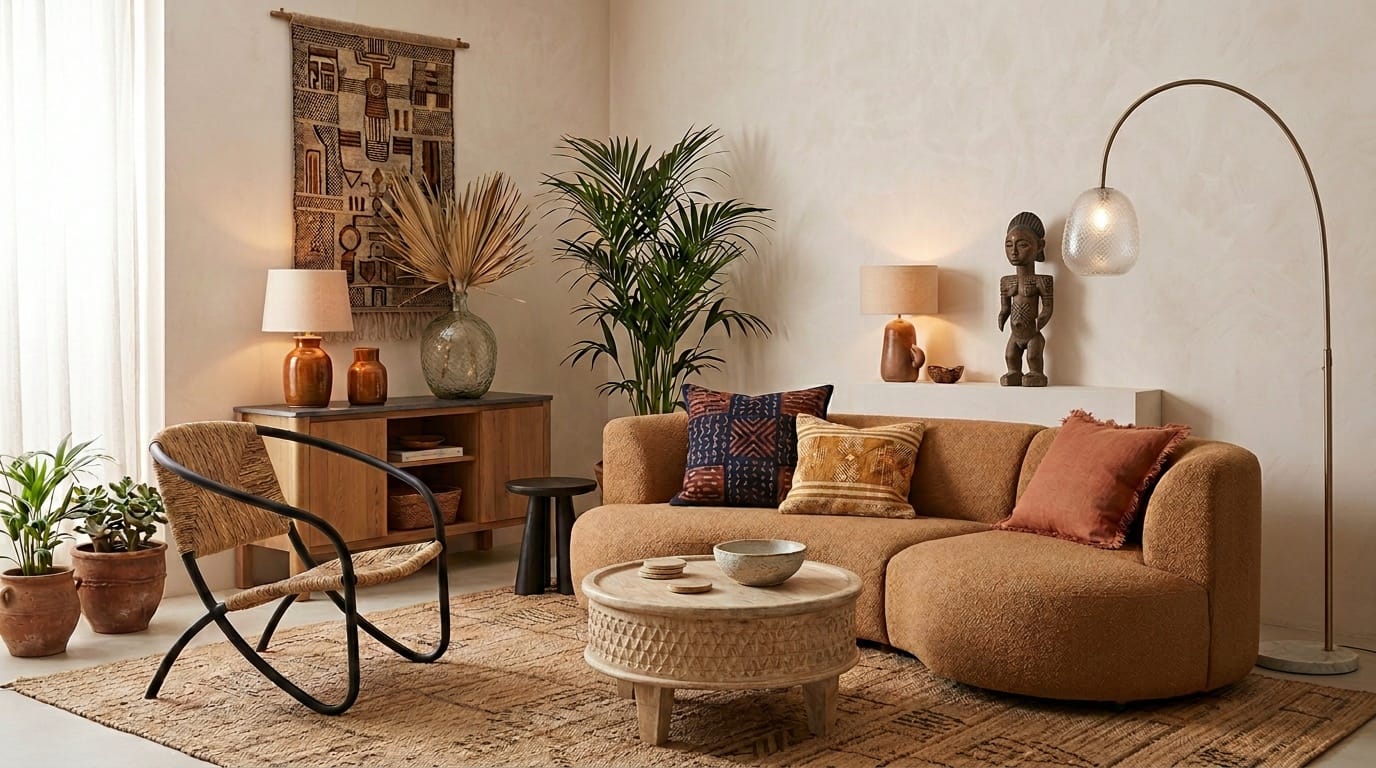
The living room is where afro boho gets to breathe. A low sofa in a neutral tone. Sand, deep brown, olive. Layered throws and cushions. Woven baskets on the floor holding blankets or magazines. One piece on the wall: a large African textile, a gallery arrangement mixing prints with woven plates, or a carved mask. Don’t cover every surface. Leave breathing room between objects. If you can’t see the wall behind the art, you’ve gone too far.
When the Kitchen Needs to Stay Quiet
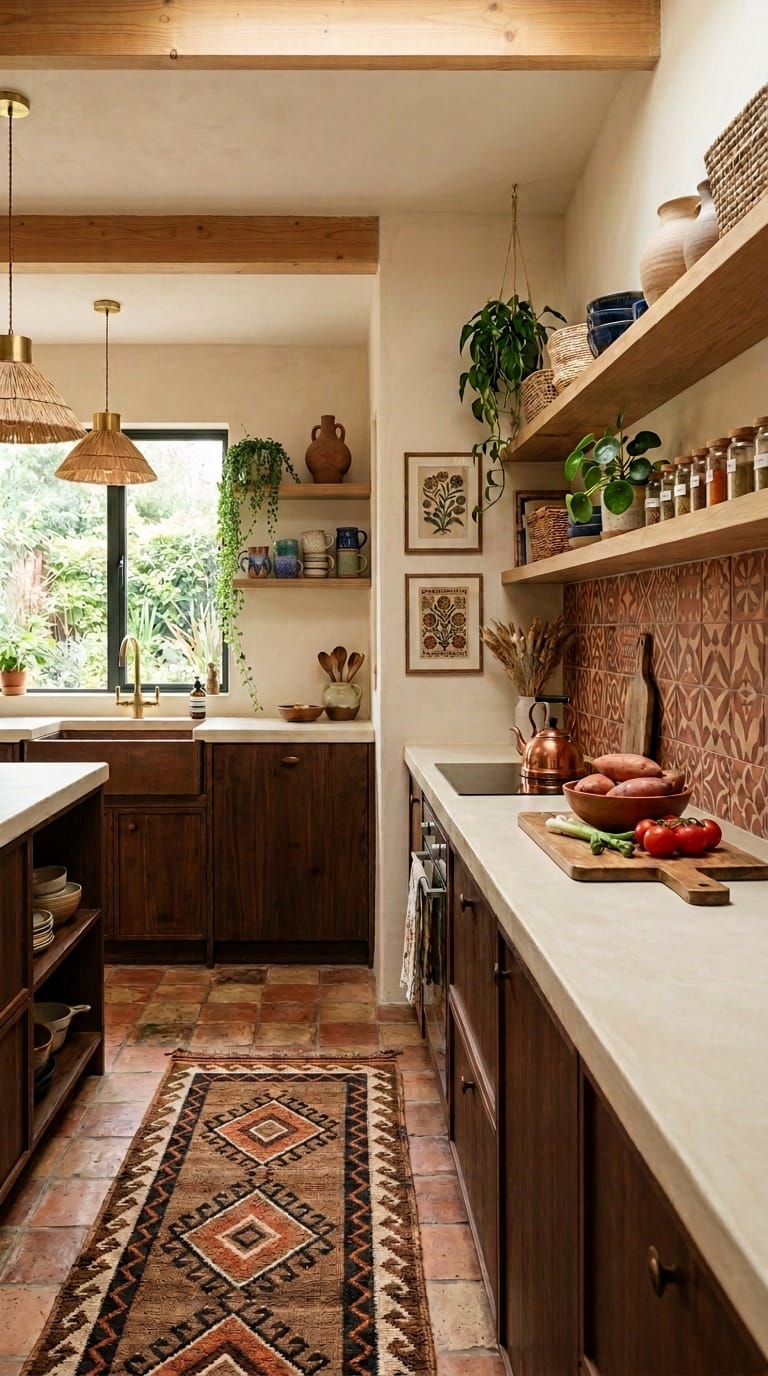
Kitchens are tricky with afro boho. Too many objects and it looks cluttered near the stove. Pick two or three spots: a woven basket holding fruit on the counter, ceramic bowls in earthy tones on open shelves, and maybe a small Ankara-print runner on the table. That’s enough. The rest stays functional. Wood cutting boards and clay pots double as decor when they’re out in the open.
Pro tip: One woven basket near the fruit bowl says more than ten items competing for attention.
One Wall, One Rug, Done
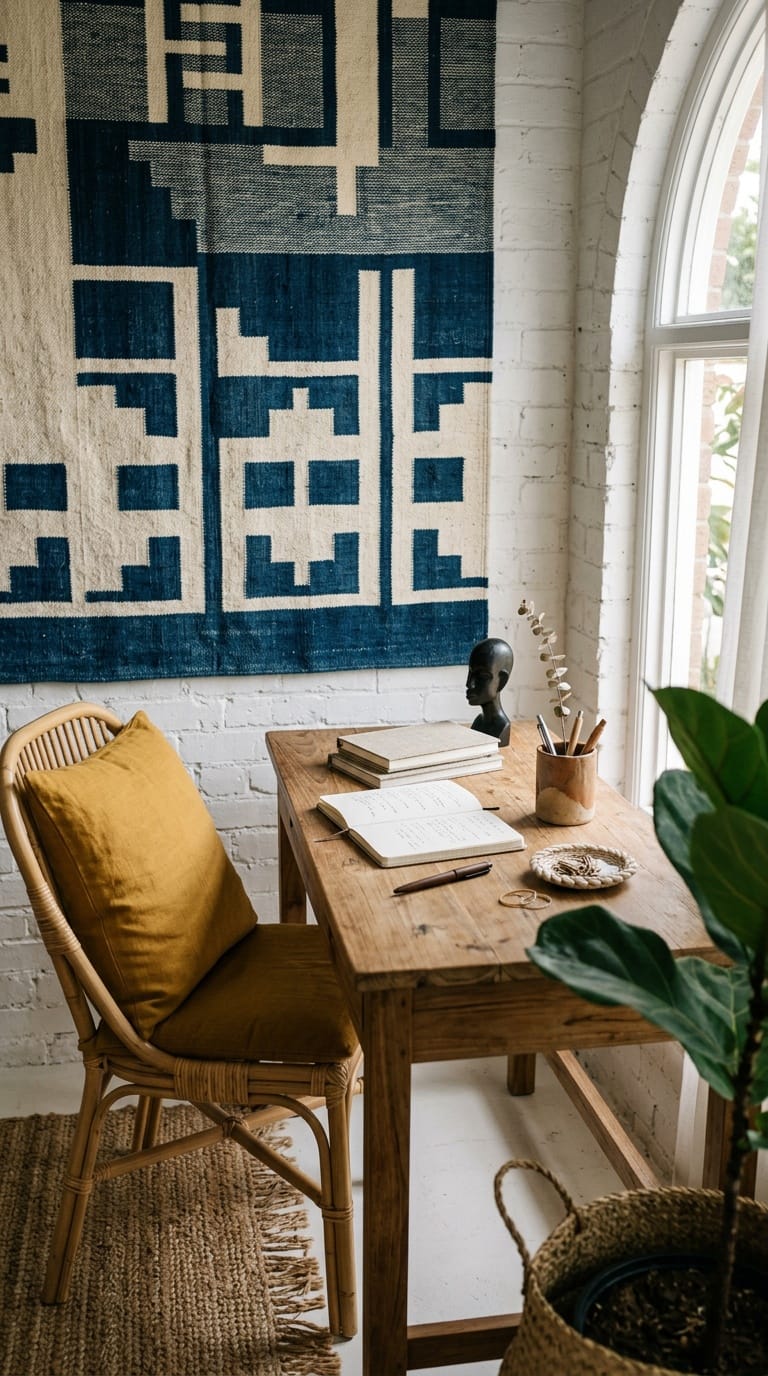
An office needs calm, so dial back the layers. One woven wall hanging behind the desk. A clay or ceramic pencil holder. A jute rug underfoot. The desk itself works best in natural wood. No glass, no white laminate. A small carved figure or a single cowrie shell tray for paper clips. Keep the cultural pieces to one corner of the desk and one wall spot. Everything else stays minimal.
Three Things Max. Bathroom.
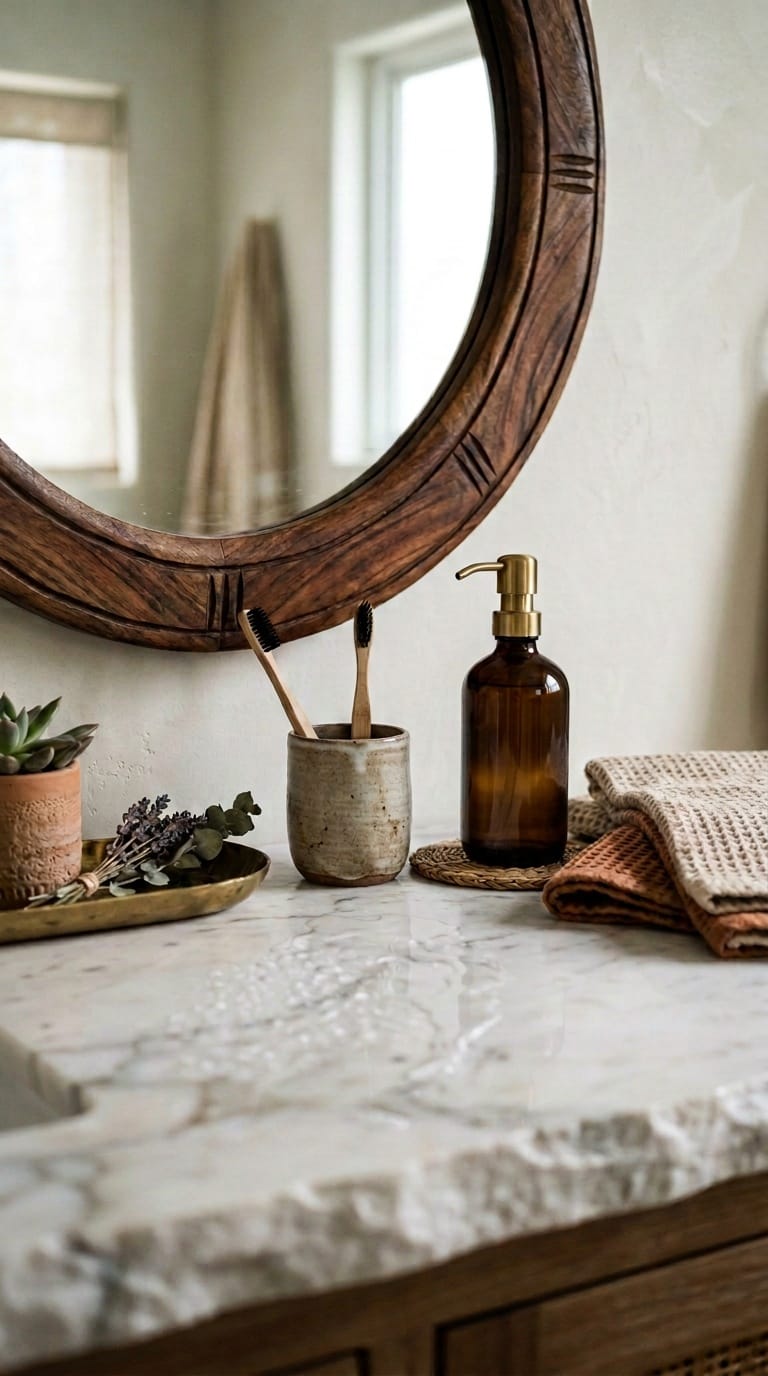
Bathrooms get wet. Keep it to three things max. A woven basket for rolled towels. A wood tray across the tub or on the counter holding soap and a candle. One small plant in a clay pot. That’s the whole look. Anything fabric-heavy or paper-based won’t survive the humidity. Stick to natural materials that handle moisture: wood, clay, woven seagrass.
Skip if: Your bathroom has zero ventilation. The wood tray will warp and the basket will mildew within a month.
Burnt Orange Does All the Work
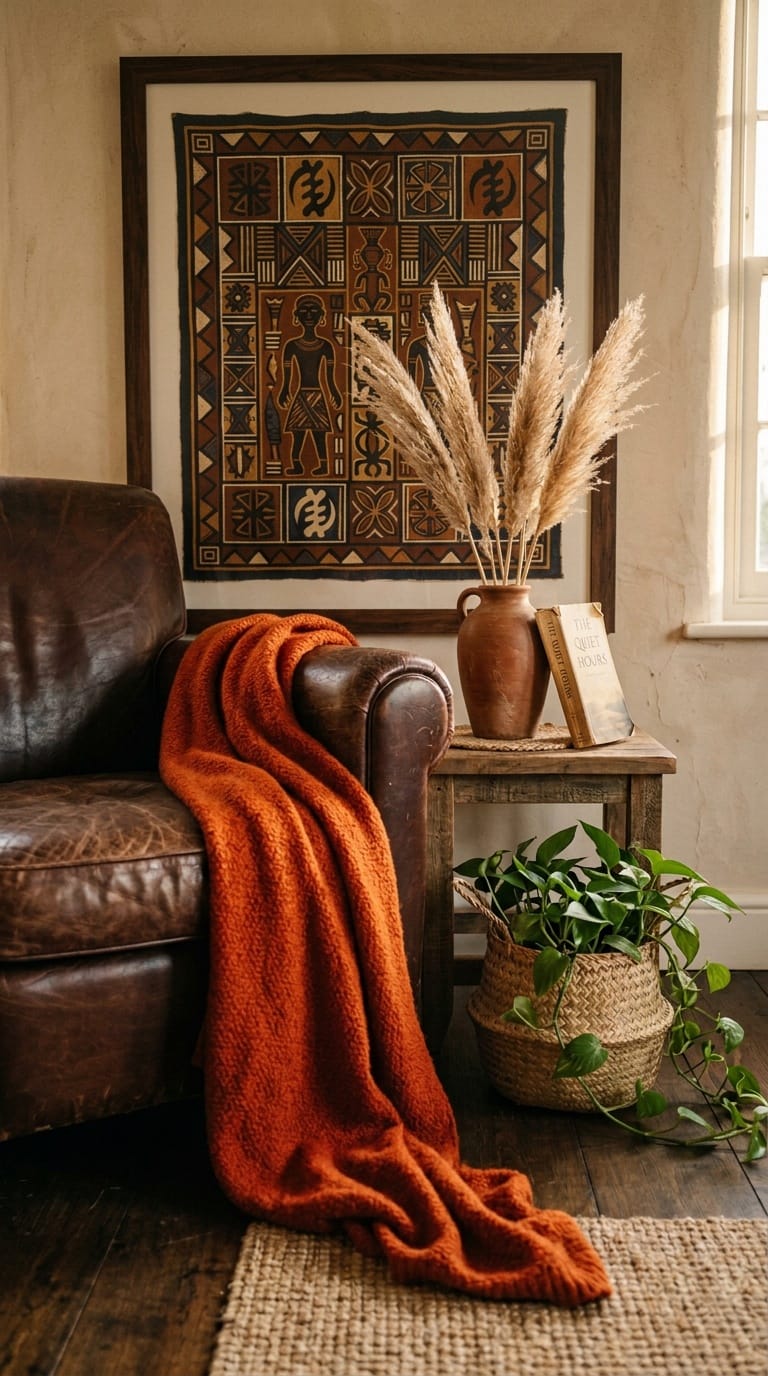
Orange is the color that ties afro boho together. Not bright tangerine. Burnt orange, rust, terracotta. Use it in pillows, throws, a single accent wall, or a ceramic vase. It works against deep brown furniture, olive green plants, and sandy neutrals. One burnt orange throw on a brown sofa changes the whole room for under twenty bucks.
Why it works: Burnt orange looks warm in any light. Morning, afternoon, lamp. It’s the one color that never feels cold in a room.
Earth Tones That Hold It Together
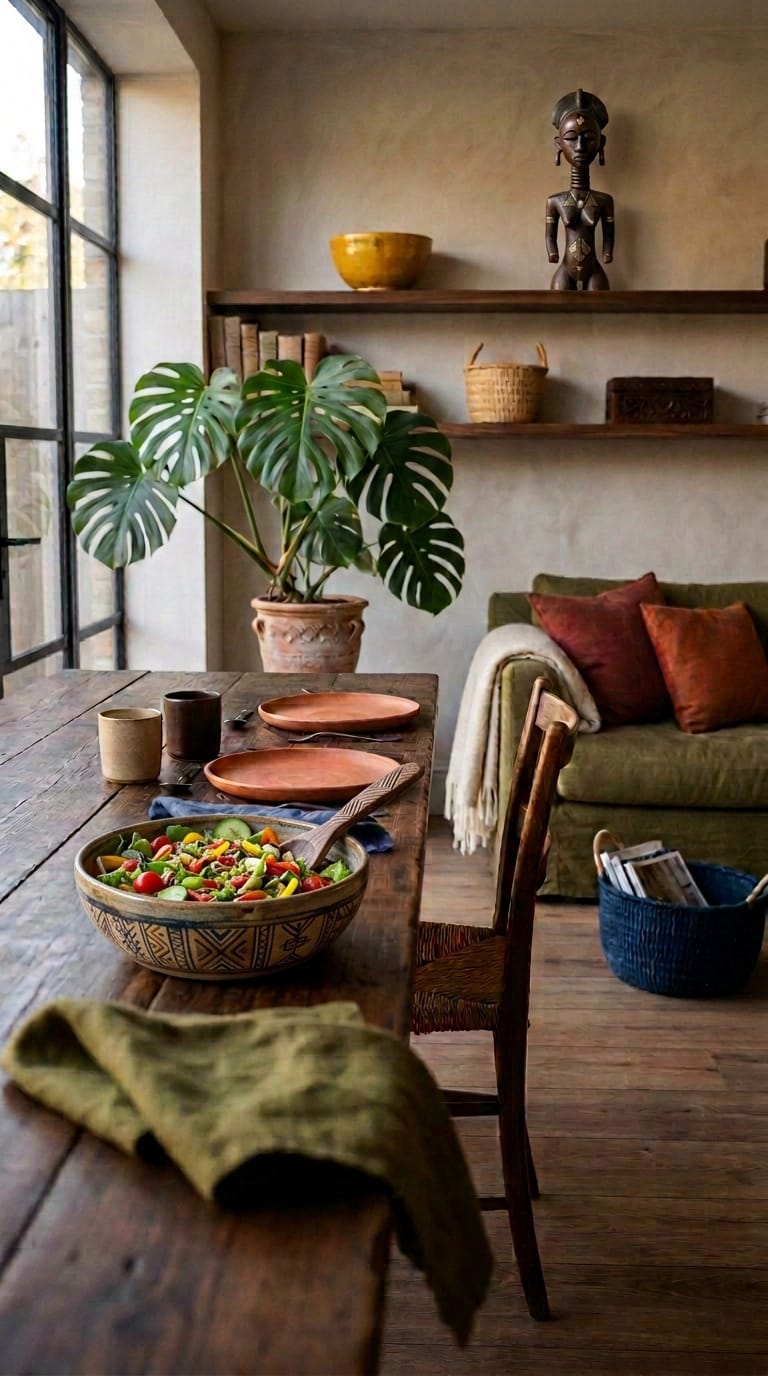
The palette makes or breaks afro boho. Start with a base: sandy beige or warm white walls. Add deep brown through wood furniture. Layer in terracotta, olive, rust through textiles. Indigo and mustard come last as accents. A pillow, a ceramic, a candle. If you stick to these tones, even mismatched pieces look like they belong together. The moment you add bright white or cool gray, the warmth drops out.
Fewer Layers, Same Soul
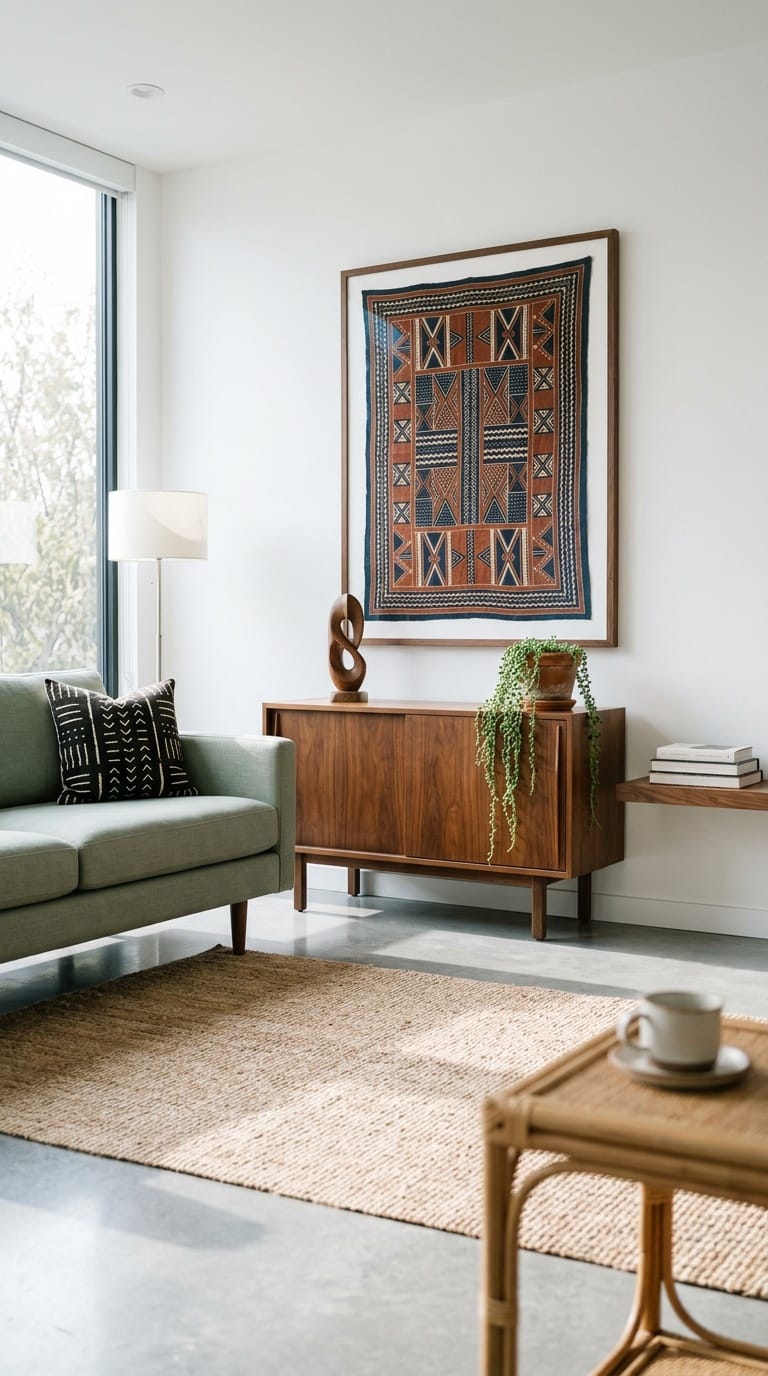
Modern afro boho strips back the layers but keeps the soul. Fewer objects, cleaner lines, more negative space. A single large African print on a white wall instead of a gallery cluster. One sculptural piece on a floating shelf. The furniture leans mid-century. Tapered legs, low profiles. But the materials stay natural: wood, rattan, linen. Same cultural elements, just with more room to breathe around them.
Best for: Apartments and newer builds where full layers would overwhelm a small room.
Heritage Front and Center
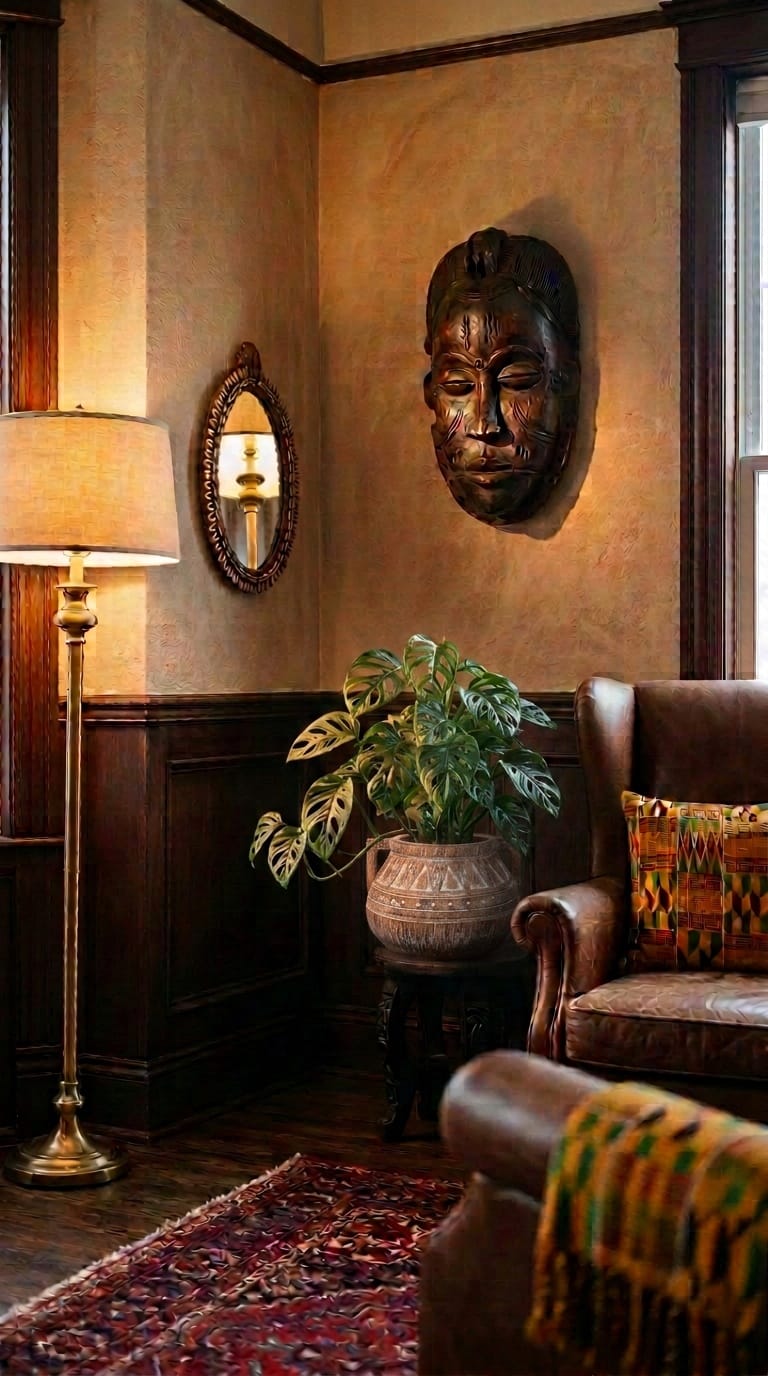
This leans heavier on the African side. Kente cloth pillows. Adire textiles (hand-dyed indigo from Nigeria) as throws or wall hangings. Carved masks displayed individually, not in clusters. Cowrie shell details on mirrors or trays. The boho part comes through in the natural materials and relaxed arrangement. Nothing mounted perfectly straight, nothing matching. This is the version for people who want their heritage front and center, not blended into a “global” mix.
Pro tip: Display one mask per wall. Two or more together starts looking like a showroom instead of a home.
Start With One Mudcloth Piece
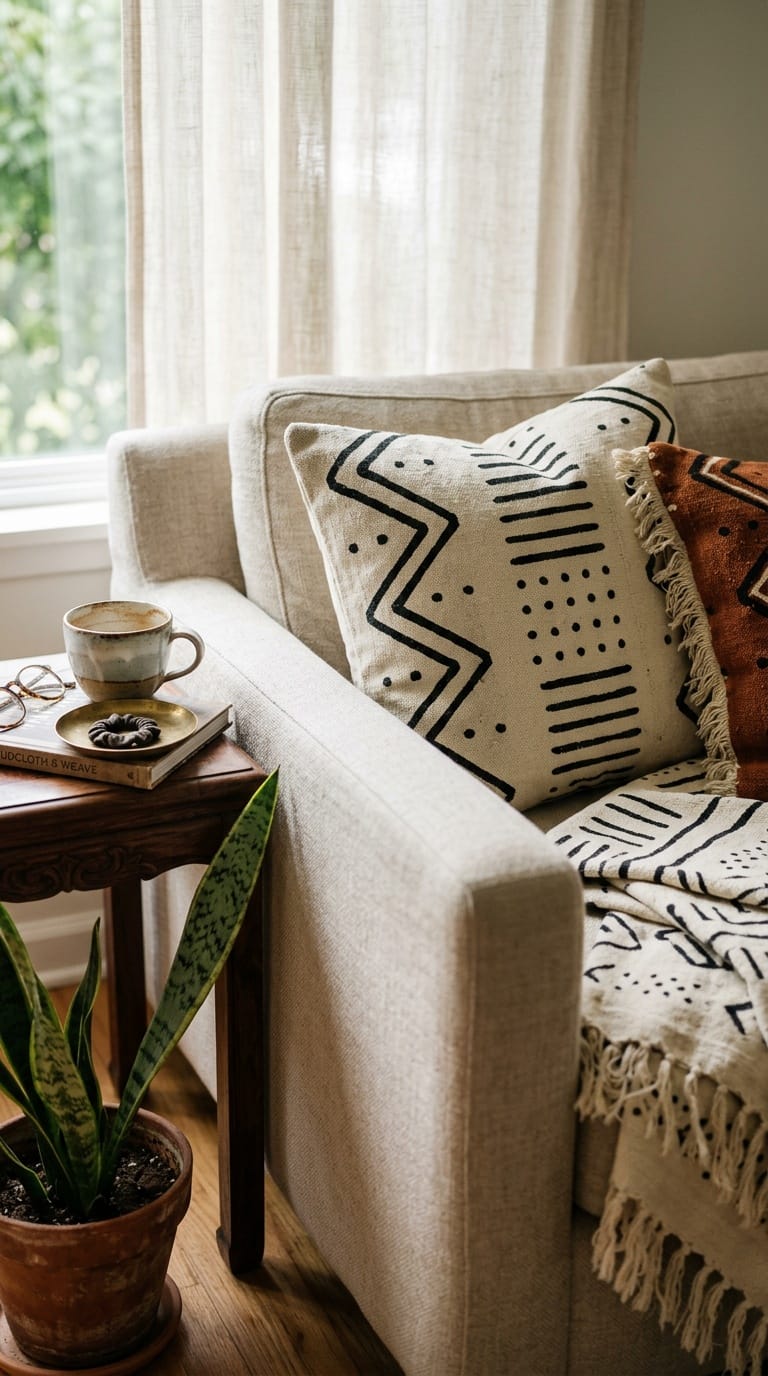
Mudcloth is the easiest entry point. A single mudcloth pillow on a neutral sofa. A mudcloth table runner. A framed piece of mudcloth fabric as wall art. The patterns are geometric and graphic enough to anchor a room on their own. Stick with authentic Malian mudcloth if budget allows. The hand-dyed versions have slight irregularities that printed copies can’t replicate. Black-on-white and rust-on-cream are the most versatile combinations.
The Collected Look
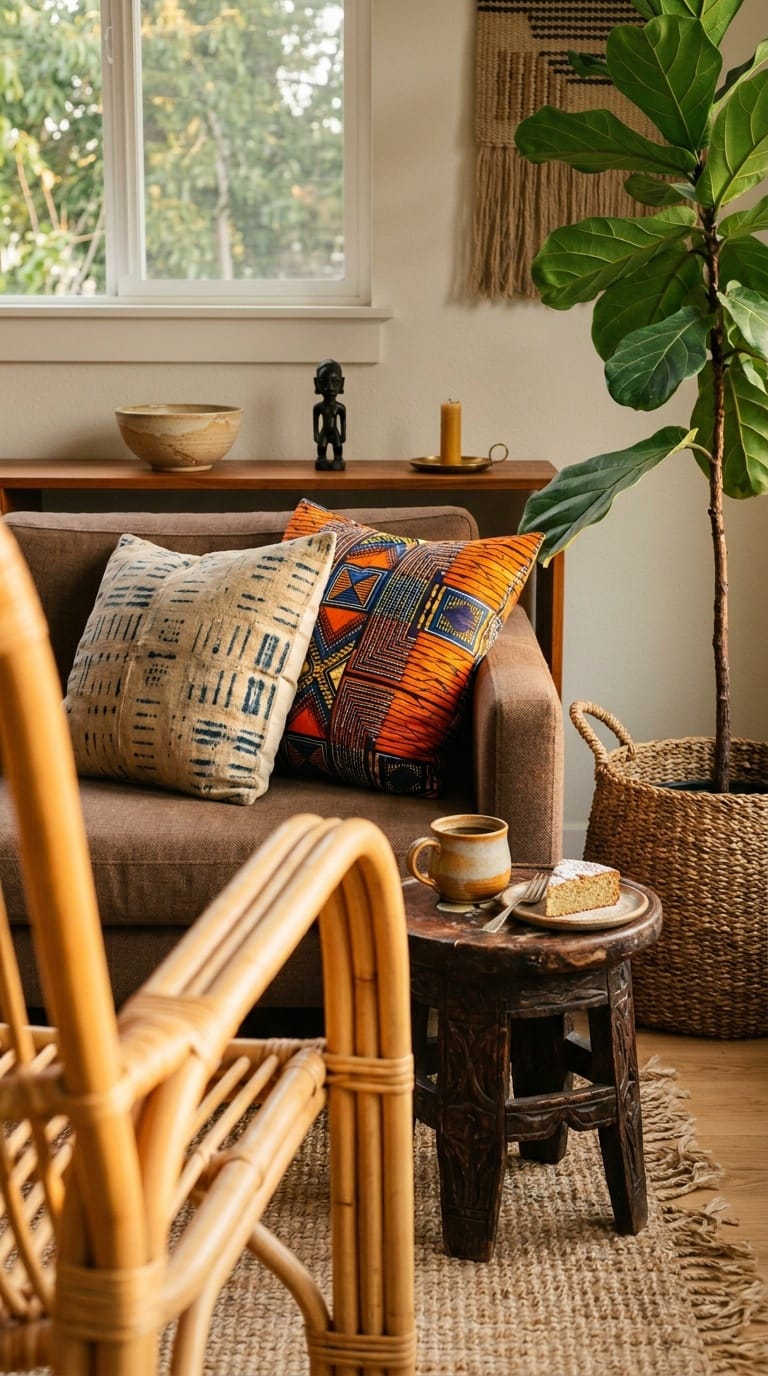
The difference between “decorated” and “collected” is time. Or at least the illusion of it. Mix old and new. A brand-new rattan chair next to a vintage carved stool. A printed Ankara pillow next to a faded mudcloth one. Keep heights varied. Tall plant, low basket, medium lamp. And leave gaps. A shelf with three objects and two empty spots looks more intentional than one stuffed with eight things. If someone walks in and asks “where did you get that?” about one specific piece, you’ve done it right.
Why it works: Gaps between objects make each piece stand out. A crowded shelf makes everything disappear.