
Just a quick heads up: this website contains affiliate links, so I earn from qualifying purchases, which helps support this blog.
A moody hallway does not need more darkness. It needs better choices.
Paint helps. But the difference usually comes from light, wall detail, rhythm, and one strong visual move. Use these ideas as a tighter edit, not a checklist to pile into one narrow space.
Start With the Light Before the Paint
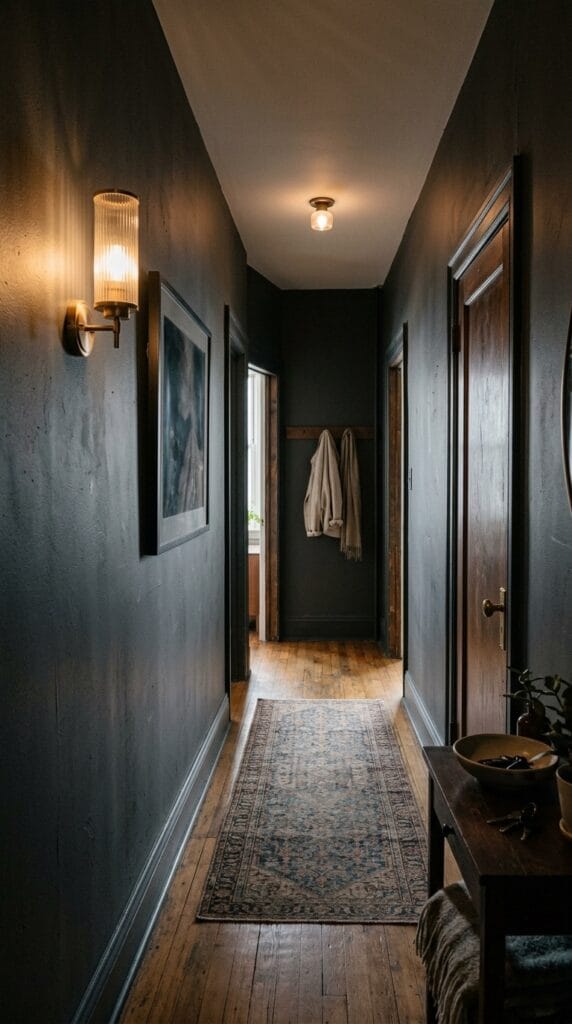
Dark paint only works when the hallway has glow.
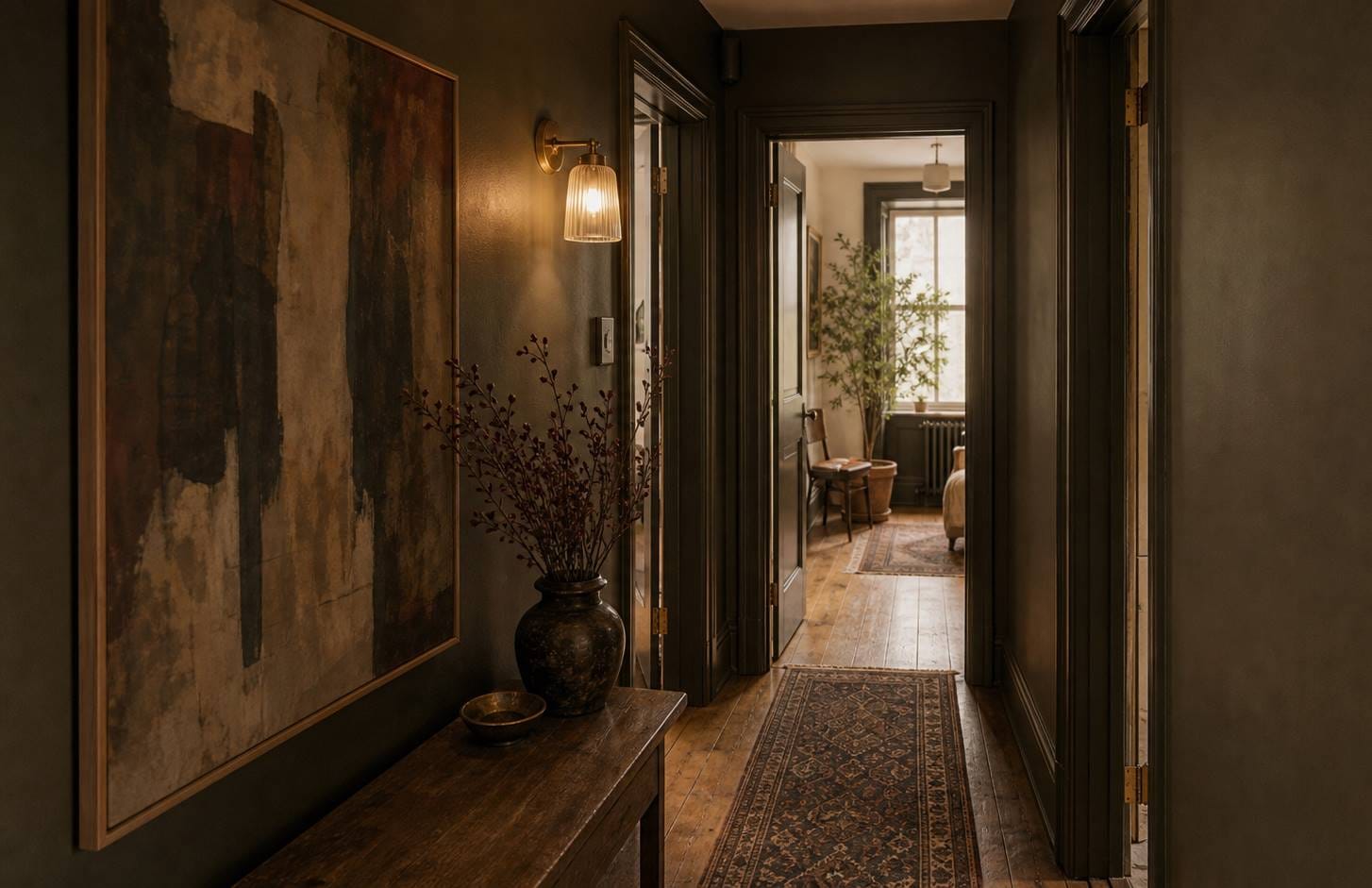
Try this: add sconces, a glass flush mount, picture lights, or one warm light at the end of the hall before choosing the deepest color.
Avoid: one cold overhead bulb and black walls. That reads flat, not moody.
Use Deep Green Instead of Flat Black
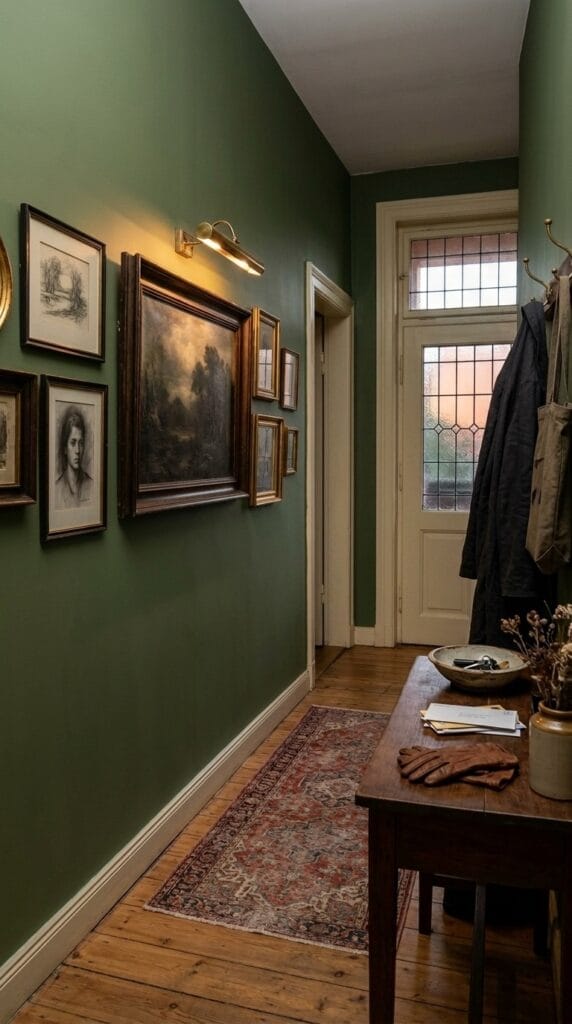
Deep green gives shadow without killing the room.
Try olive, forest, or brown-green with brass lights, dark wood frames, and a faded runner.
Avoid: bright emerald if you want a quieter, older-house feeling.
Try Inky Blue for a Cleaner Mood
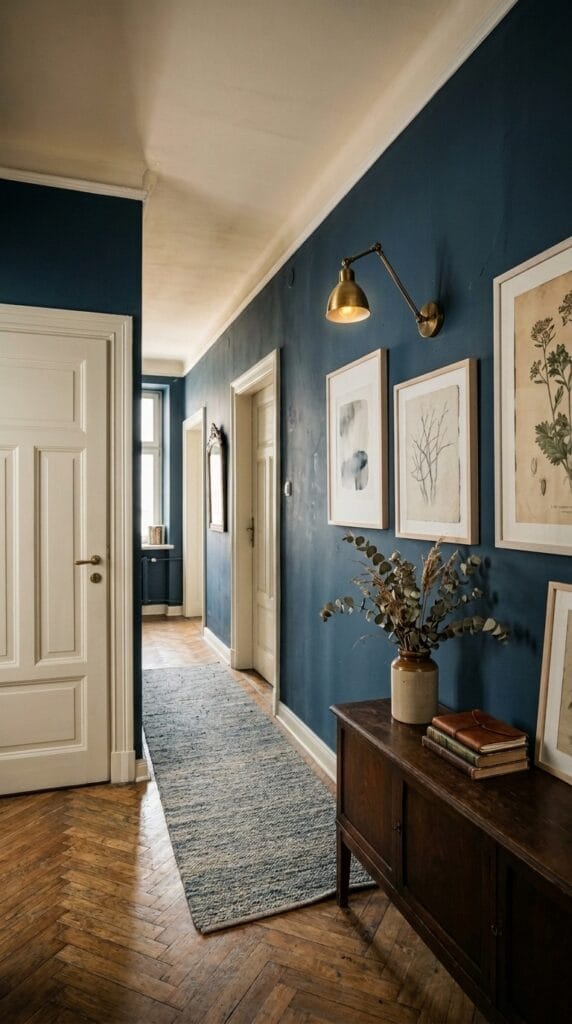
Blue can feel dark without feeling heavy.
Try navy, slate, or inky blue with a lighter ceiling, pale artwork, and warm metal.
Avoid: dark blue with cold white bulbs. It turns sharp fast.
Color Drench the Trim, Not Always the Ceiling
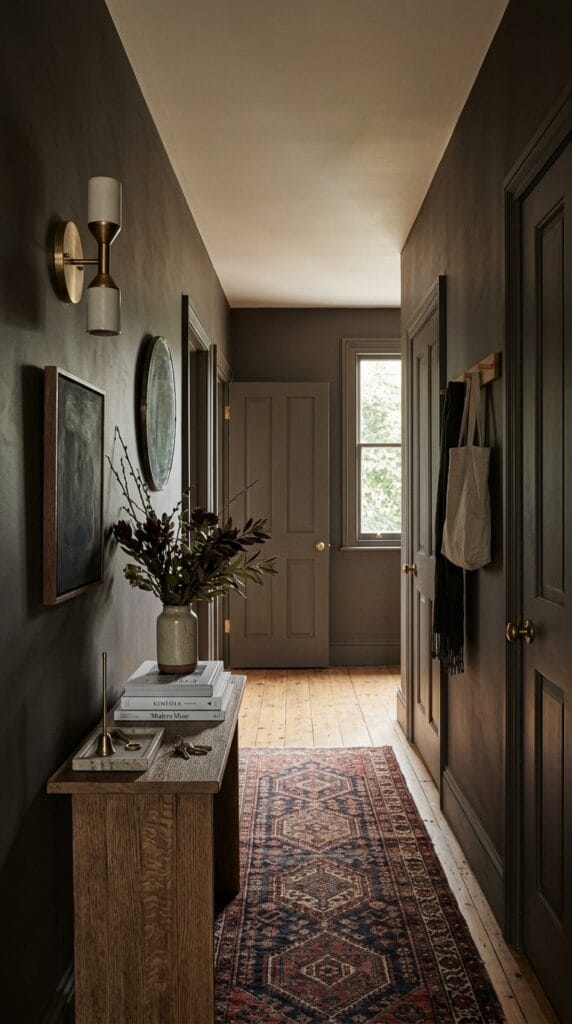
Color drenching is useful. Full color drenching is not always kind to a hallway.
Try matching the walls, doors, and trim. Keep the ceiling lighter if the hall is low or narrow.
Avoid: painting every surface dark in a windowless corridor with weak lighting.
Add Paneling Before More Decor
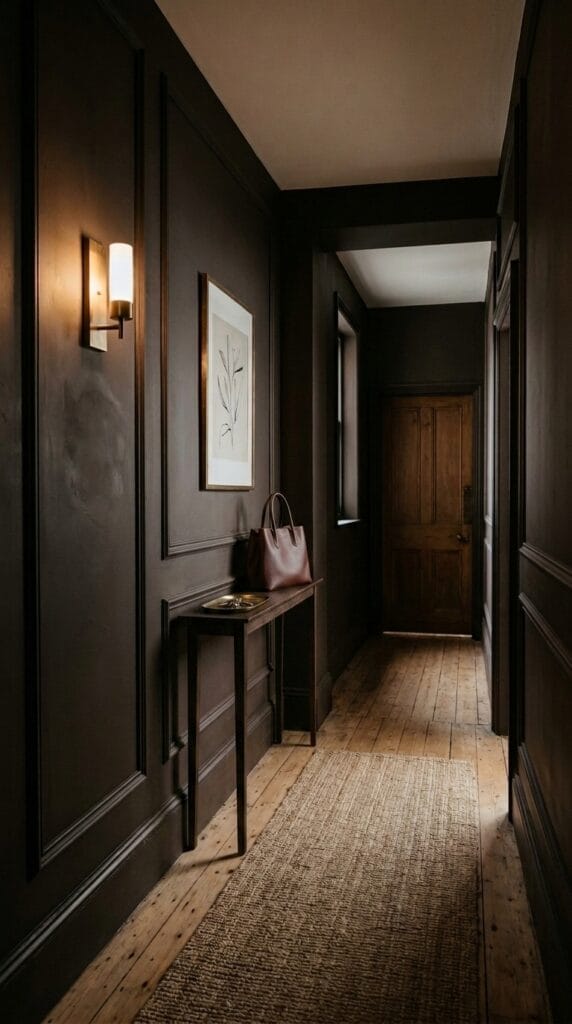
If the hallway feels plain, the wall may need structure, not another object.
Try picture-frame molding, beadboard, or half-wall paneling. Paint it the same dark color for shadow and depth.
Avoid: tiny busy trim boxes in a very narrow hall.
Use Wallpaper With a Clear Stop Point
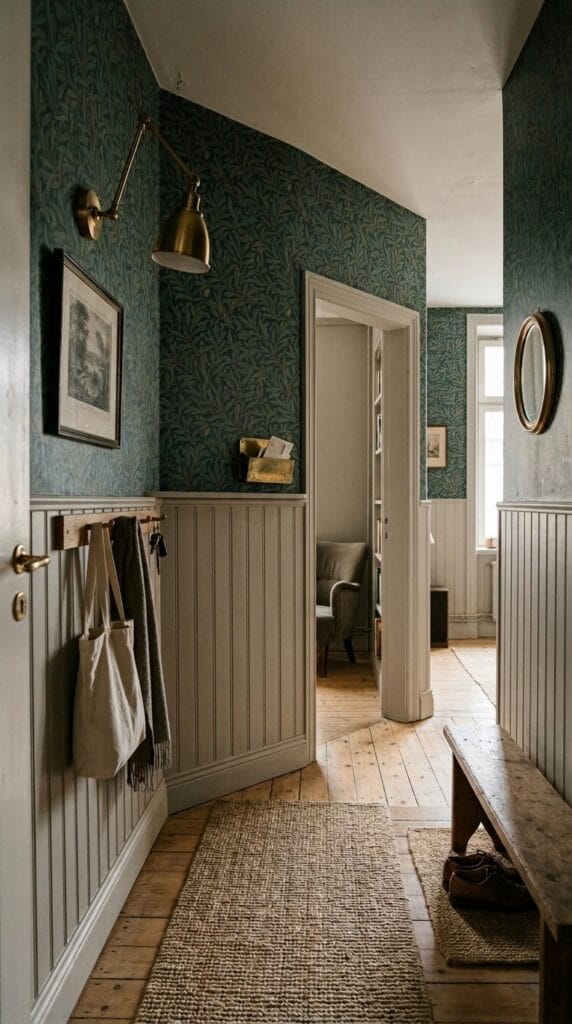
Moody wallpaper works best when it has boundaries.
Try it above beadboard, on an end wall, or inside a small entry nook.
Avoid: wrapping a tight hallway in a high-contrast print with no visual break.
Give a Long Hallway an End Moment
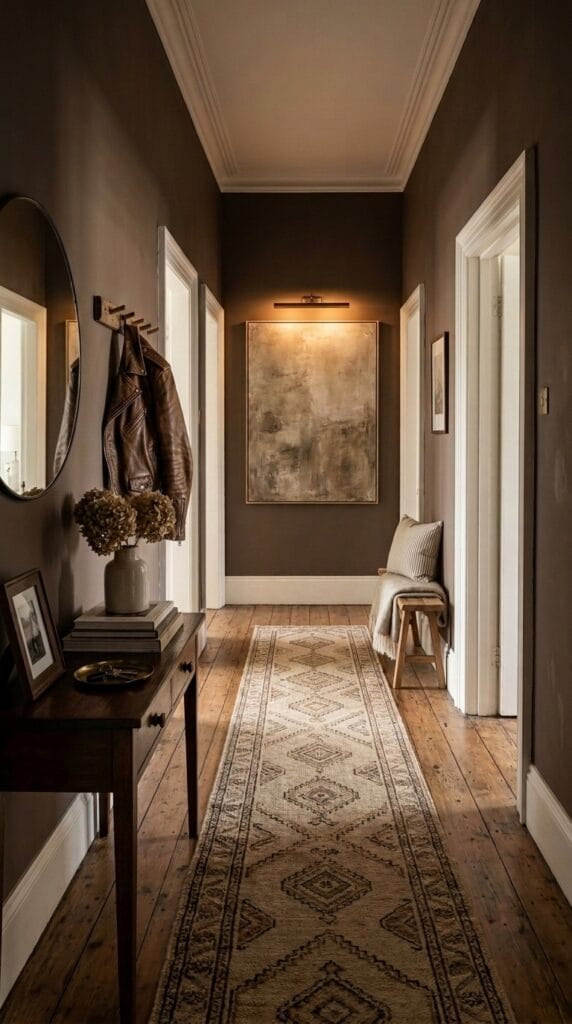
A long hallway needs somewhere for the eye to land.
Try one large artwork, a mirror, wallpaper, a darker end wall, or a picture light at the far end.
Avoid: filling both side walls with too many tiny frames.
Make a Narrow Hallway Dark in Layers
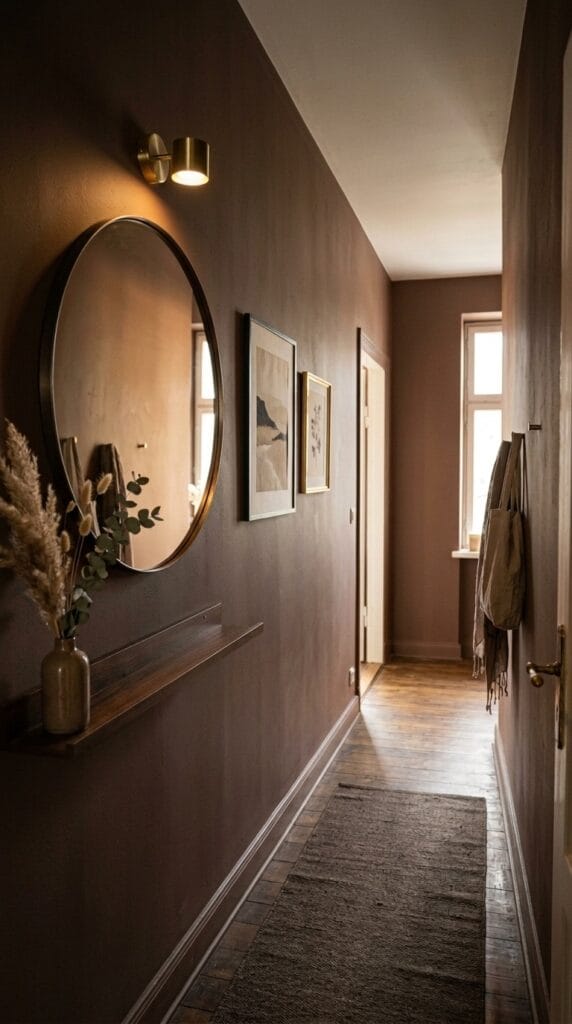
A narrow hallway can be dark if the layers stay slim.
Try deep paint, a narrow runner, small frames, one mirror, and repeated warm light.
Avoid: bulky consoles, oversized frames, and dark ceilings in a tight passage.
Use Black as Structure
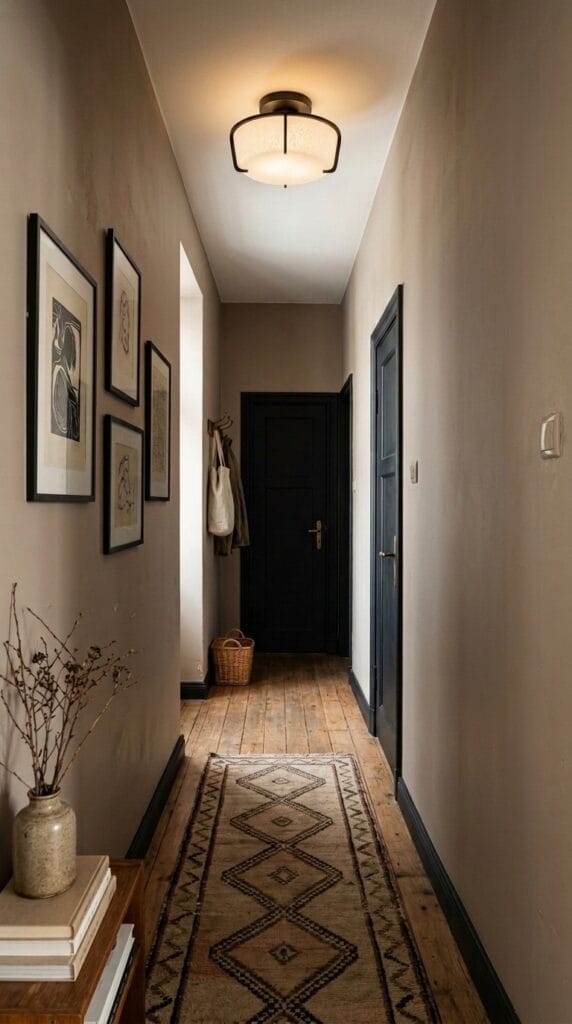
Black is stronger as a line than as a blanket.
Try black doors, black trim, black paneling, or one black end wall with good light.
Avoid: black walls, ceiling, doors, and trim all at once unless the hallway has serious light and texture.
Let the Entryway Carry the Drama
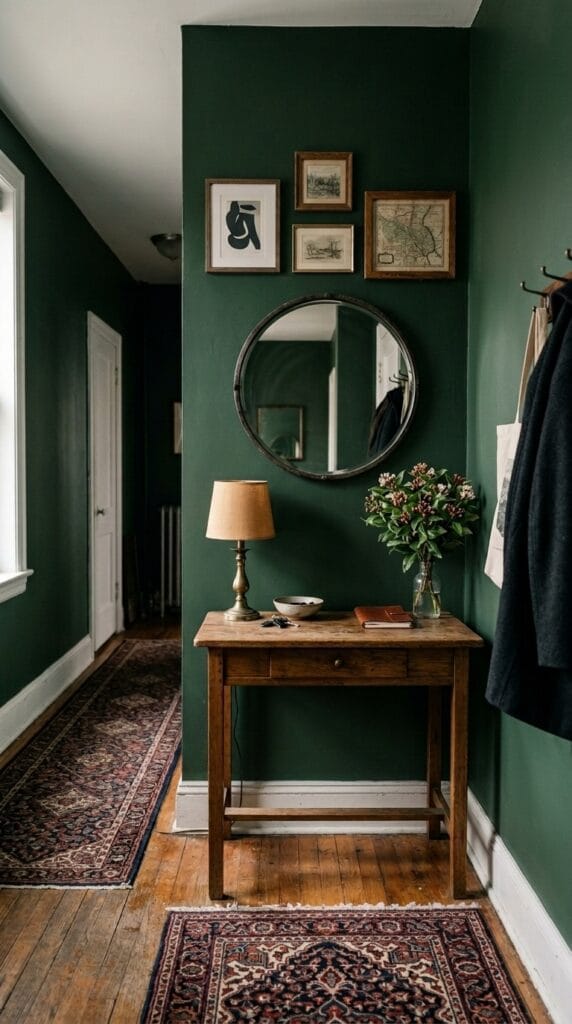
If the hallway starts at an entry, let that spot do the heavier work.
Try a dark wall color, a mirror, a shallow console, a lamp, or one stronger wallpaper moment near the door.
Avoid: a deep console that blocks an already tight walkway.
Ground Wallpaper With Beadboard
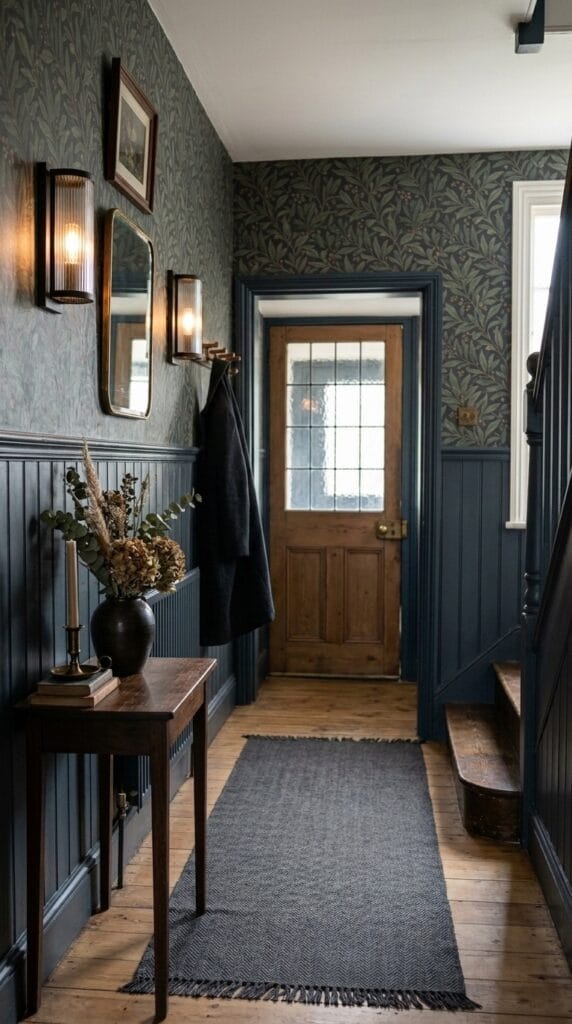
Beadboard makes pattern easier to live with.
Try dark beadboard below and a muted floral or stripe above. Repeat one wallpaper color in the runner or art.
Avoid: beadboard, busy wallpaper, busy runner, and crowded frames all together.
Choose Art With Rhythm
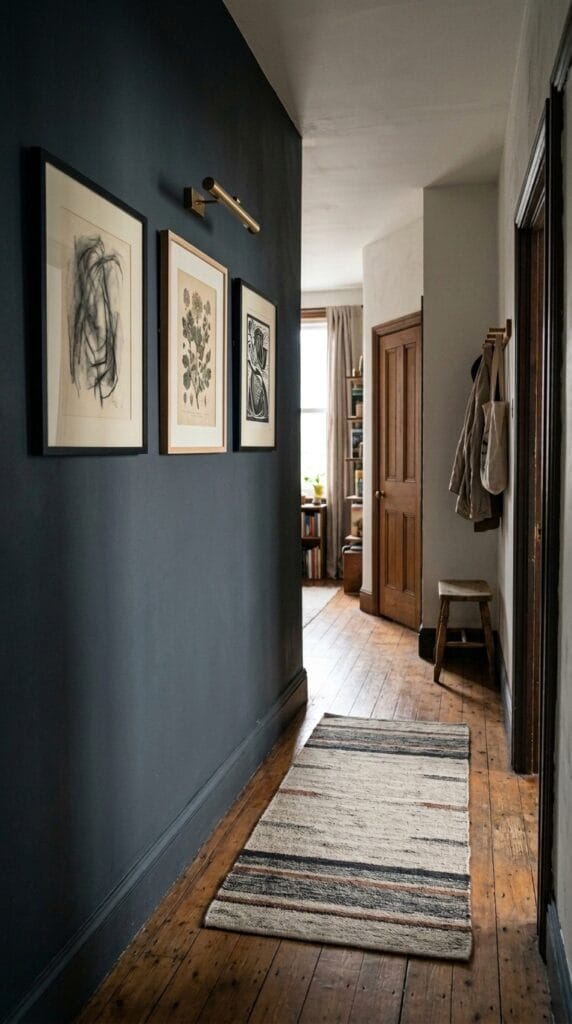
A hallway is movement. The art should have rhythm.
Try matching frames, repeated mat sizes, a clean row of prints, or one large piece at the end.
Avoid: random tiny frames scattered at different heights.
Warm It Up With a Runner and Wood
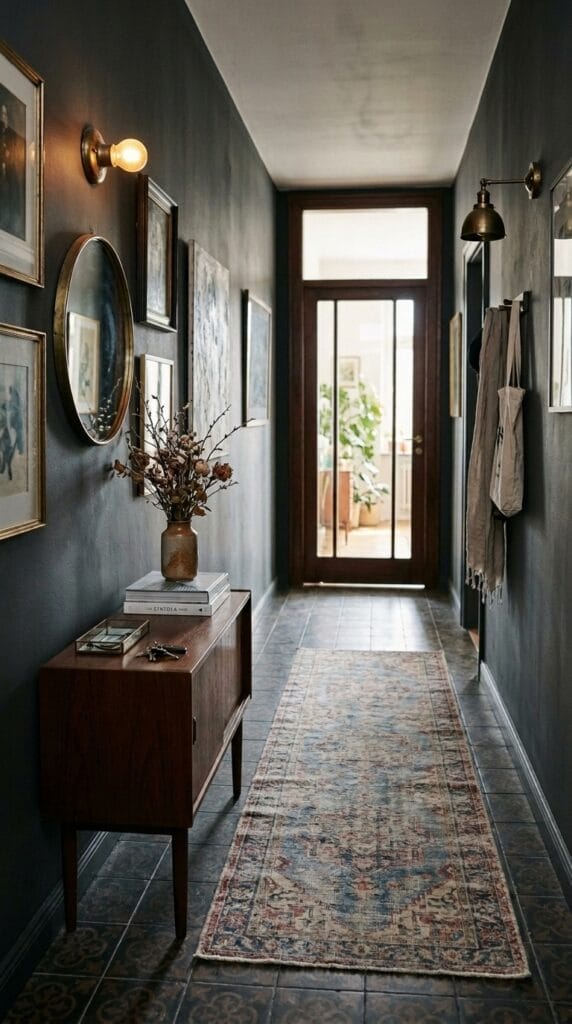
Dark walls need something tactile.
Try a runner in muted red, brown, olive, navy, or rust. Repeat the warmth with wood frames or a small vintage piece.
Avoid: a bright white runner that fights the darker palette.
Use a Dark Ceiling Only When It Helps
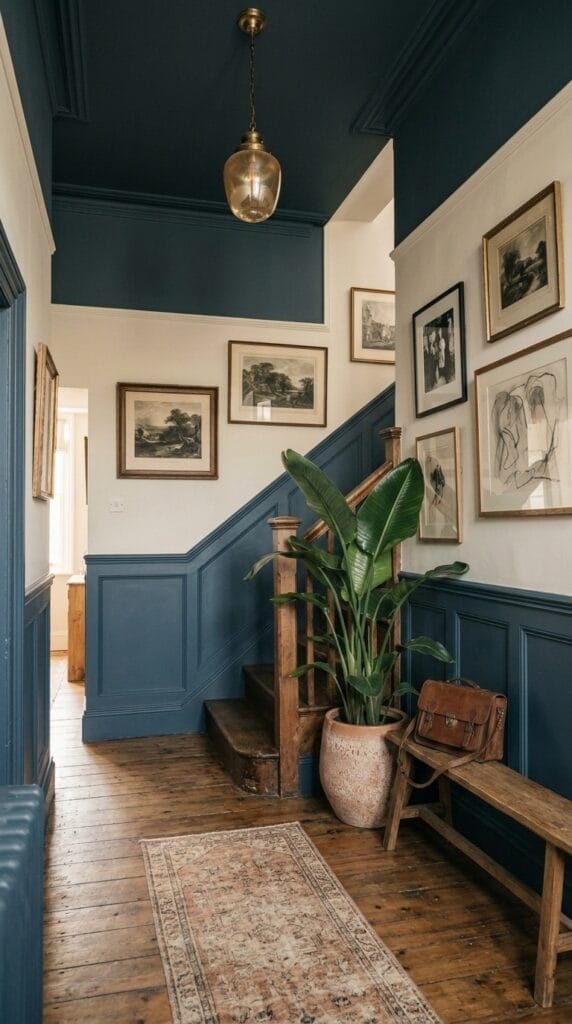
A dark ceiling can look great in the right hallway. It can also make a low one feel lower.
Try it in a tall entry, stair hall, or space with strong lighting.
Avoid: dark ceiling paint in a low no-window hallway with one light.
Edit Down to Two or Three Strong Moves
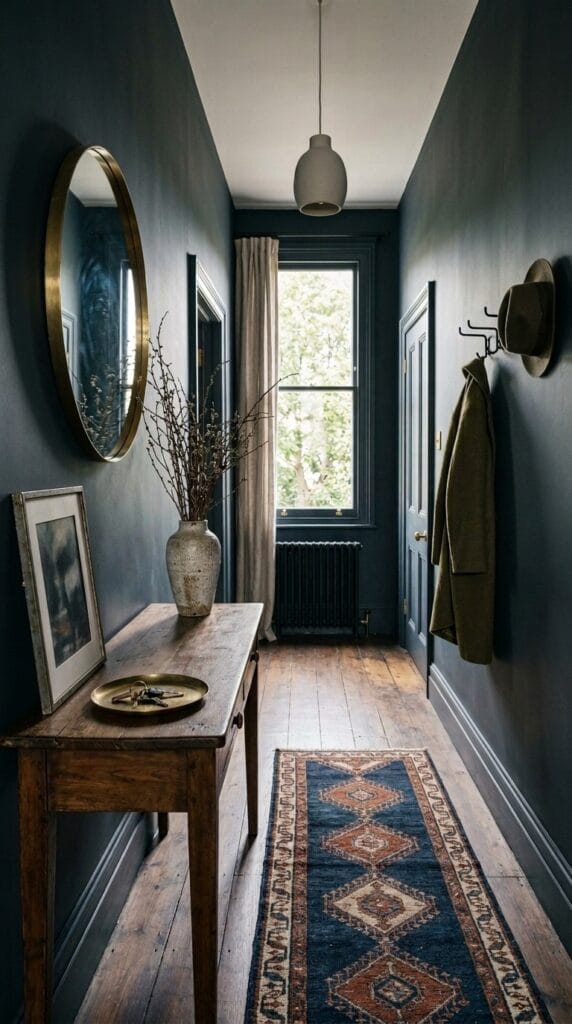
A moody hallway should feel designed, not stuffed.
Pick the main move: color, light, paneling, wallpaper, runner, or art. Let the rest support it.
Avoid: adding every trend because the hallway feels plain.