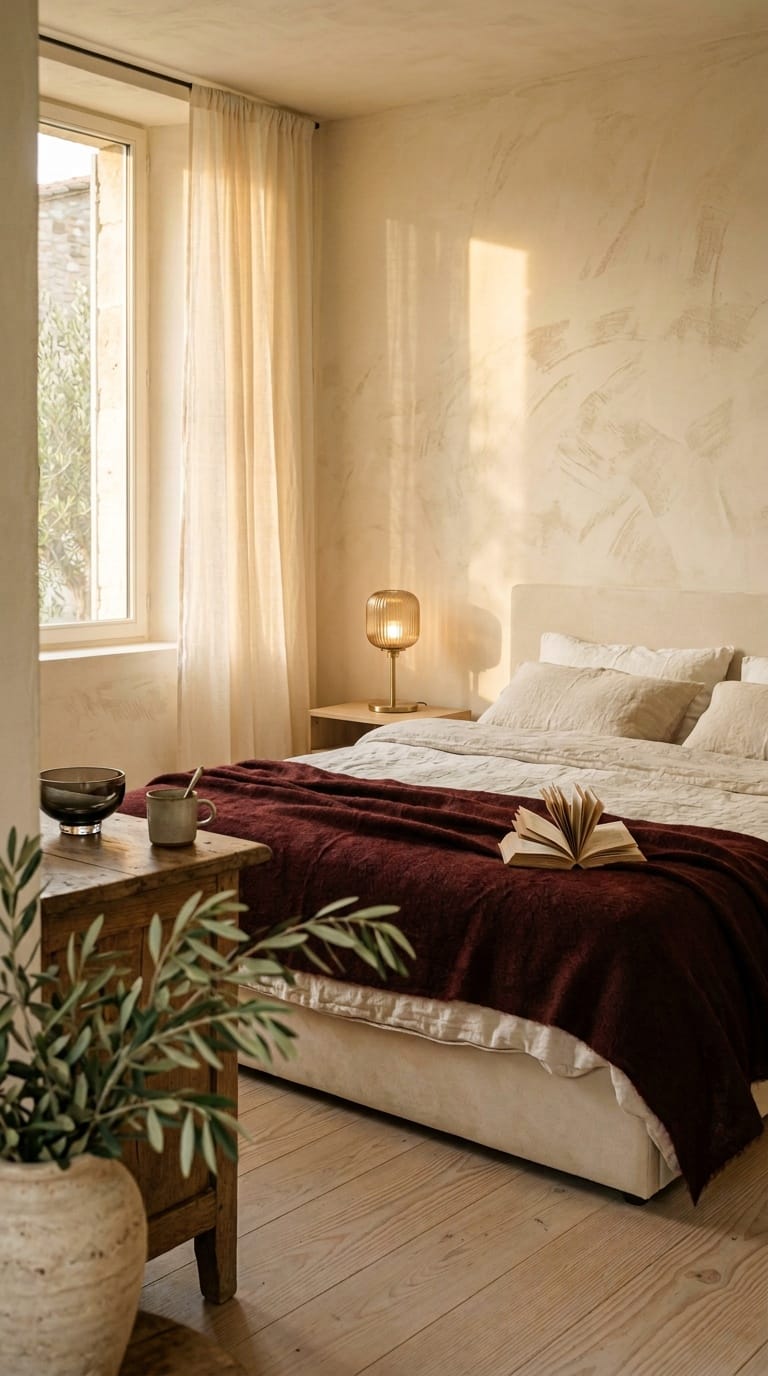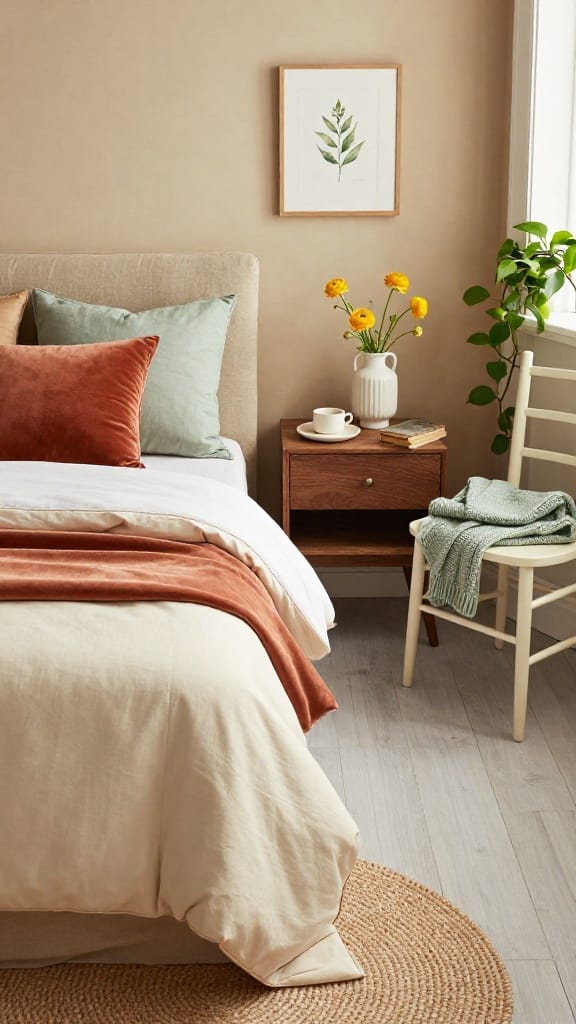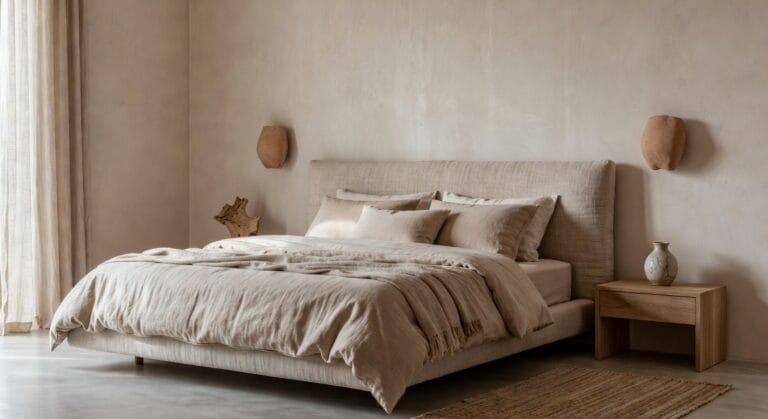

Just a quick heads up: this website contains affiliate links, so I earn from qualifying purchases, which helps support this blog.
Most bedrooms that aim for timeless end up looking like a hotel lobby or a renovation project. The difference is in the material decisions, not the color choices. Here’s what those decisions actually are.
The Timeless Bedroom Starts With the Furniture
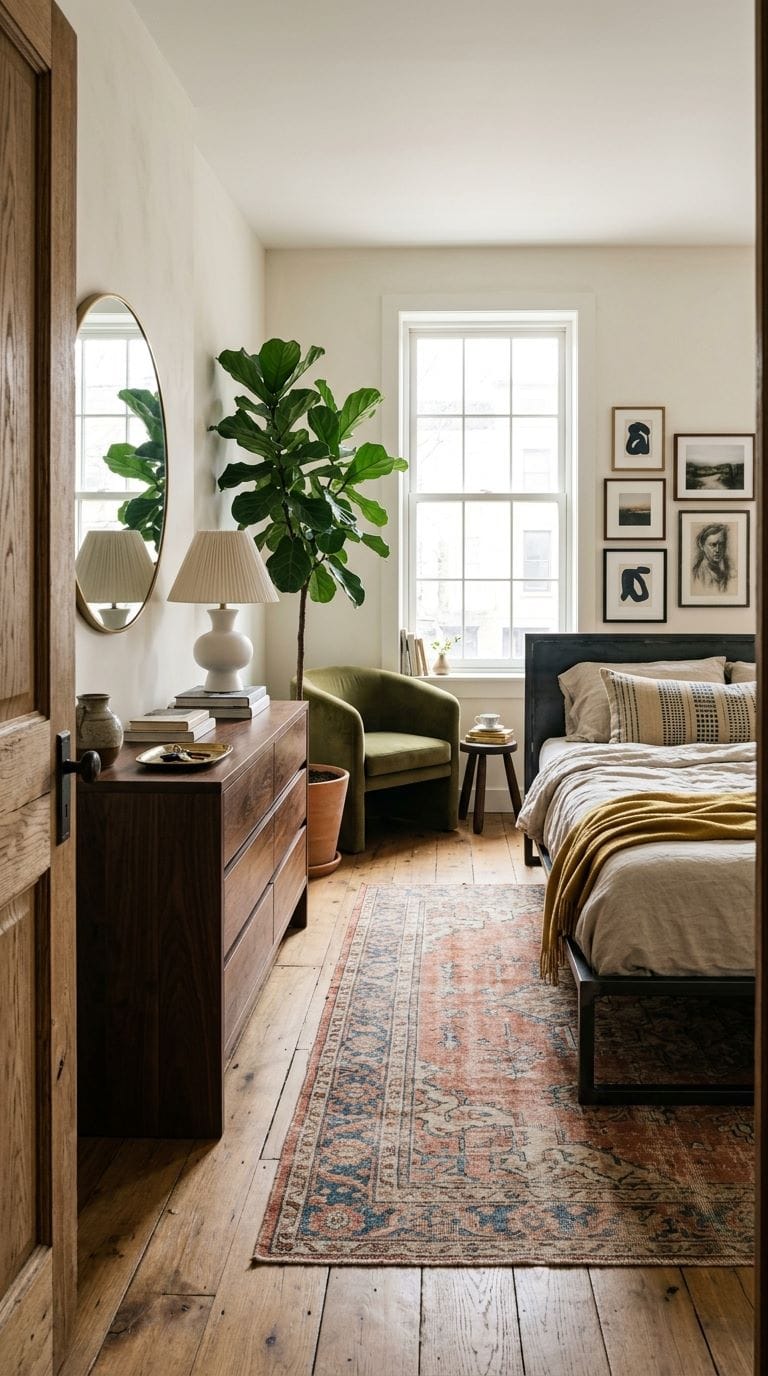
Matching bedroom sets look like a single purchase decision. That’s the problem. A solid walnut dresser next to a blackened steel bed frame does something different: the contrast between oiled straight-grain wood and matte forged metal creates visual weight that no veneer set can replicate.
Design rule: Anchor cold metal with one raw, unpainted wood surface on the same visual plane.
Why the Neutral Timeless Bedroom Is Not Actually Beige
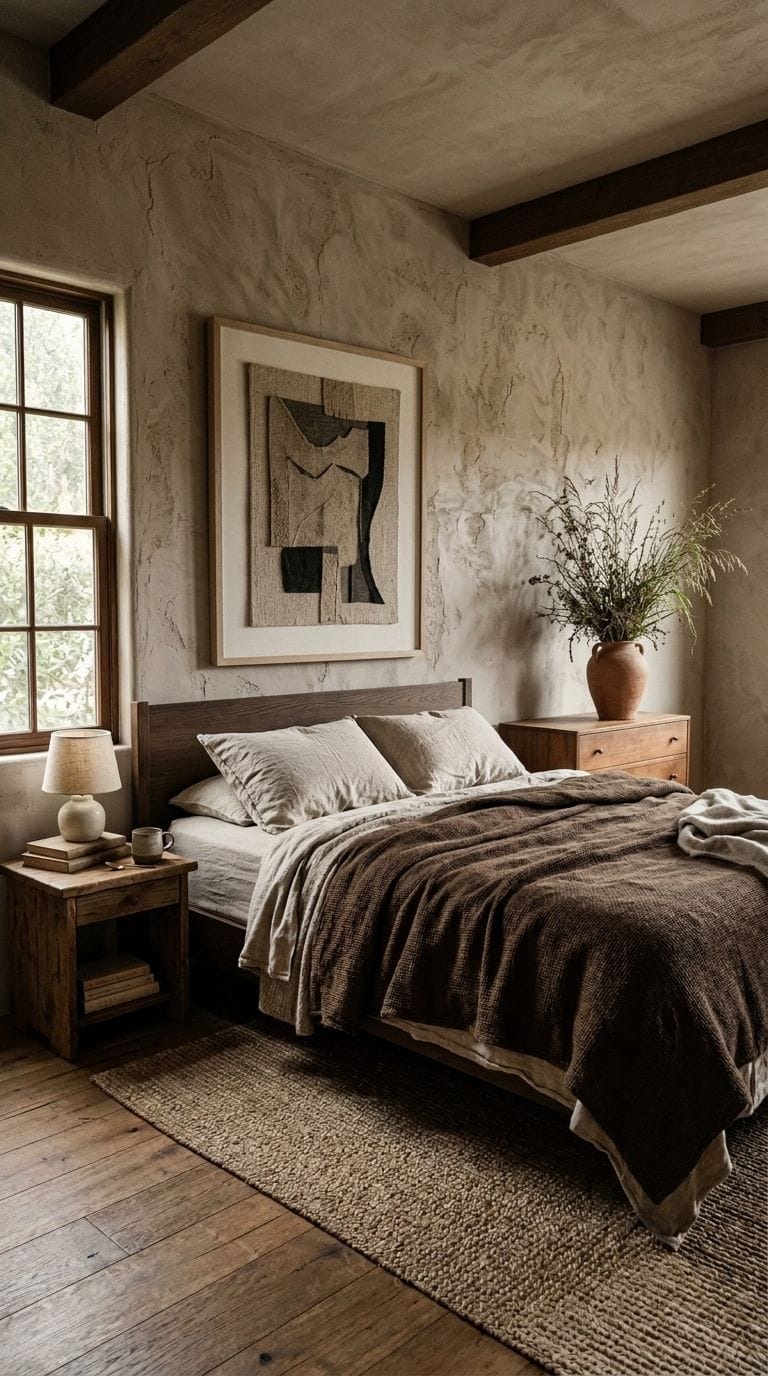
Cool gray walls look fine and then start to feel flat. Limewash plaster in mushroom taupe is the shift. The mottled chalky surface catches morning light differently than afternoon, the wall feels alive before you add anything to it. Pair it with a heavyweight hemp-cotton duvet in tobacco brown. The palette has weight instead of just color.
Skip this: Flat matte gray. It tries to be neutral and ends up looking like a rental.
The Wall Treatment Behind Every Timeless Bedroom Photo
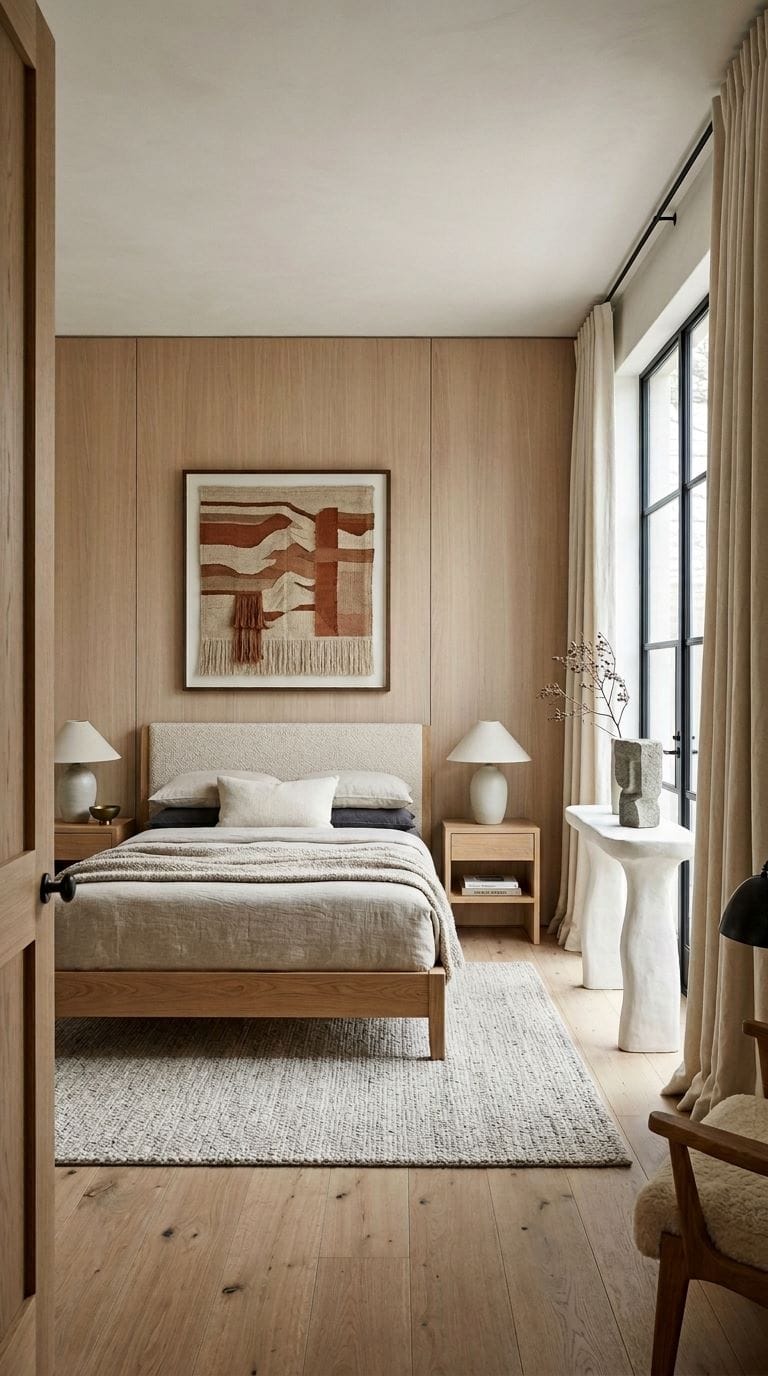
Vertical panelling in wire-brushed white oak changes the room’s proportions before any furniture arrives. Full-height panelling on one wall, limewash plaster on the others, linen canvas drapes to the floor. A framed woven tapestry on the panelled wall, wool and raw silk, muted rust, behind non-reflective glass, finishes it without adding decoration noise.
Blackout Velvet: The Textile Change Worth Making
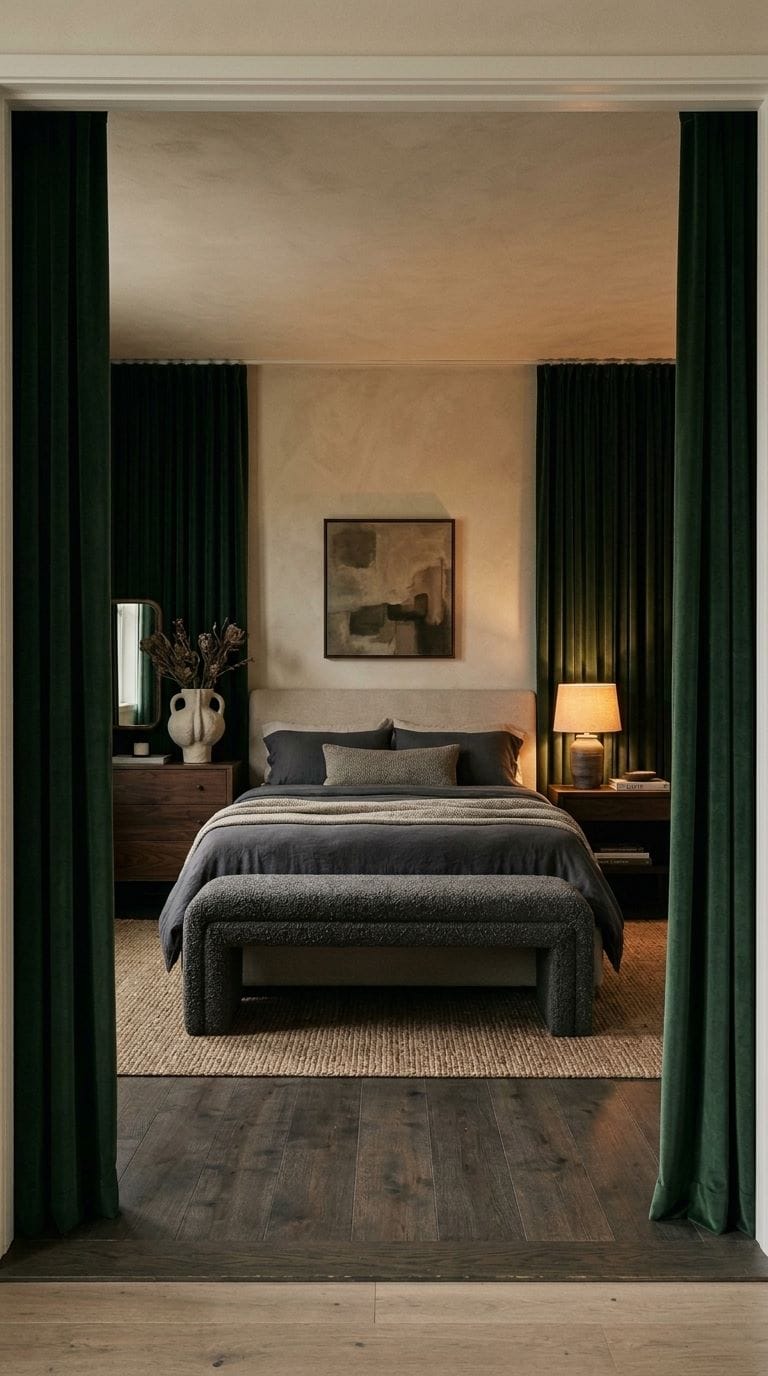
Cotton velvet in forest green, floor-to-ceiling. Dense pile blocks morning light and deadens street noise without a blackout lining, no acoustic panels required. The charcoal boucle bench at the foot of the bed adds a second material layer at a completely different texture register.
Best for: Bedrooms facing an east window or a streetlight.
The bedding decisions underneath have their own logic. Master bedding ideas covers the layering approach.
The Hardware Shift That Makes a Room Feel Finished
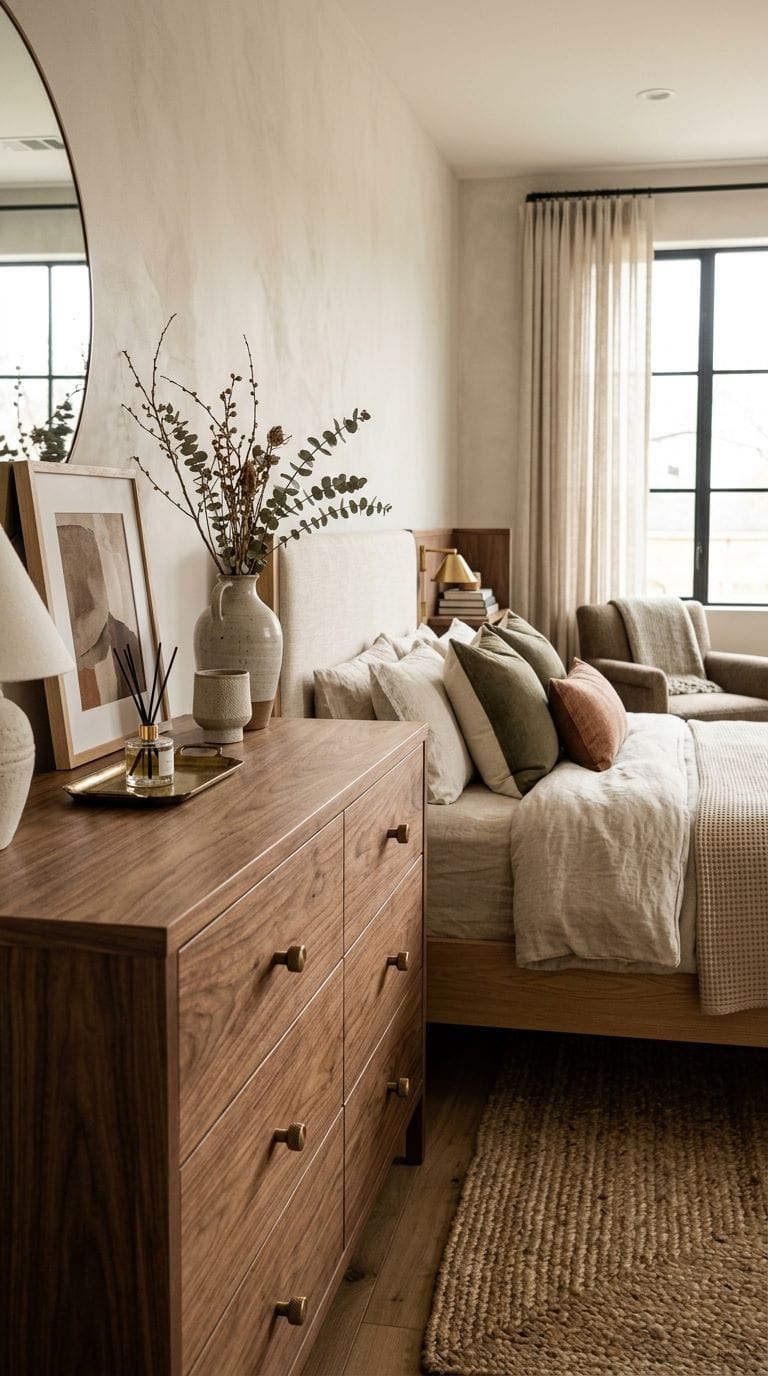
Knurled bronze drawer pulls are the detail that separates a finished room from one that’s missing something. Rough knurling gives grip on heavy drawers, oil-rubbed patina deepens rather than showing fingerprints. Iron drop ring pulls in matte black for solid-wood dressers. Leather-wrapped door levers in saddle brown for the entry.
Design rule: Knurled hardware only lands on visible wood grain. Painted MDF kills the effect.
Vintage Pieces That Earn Their Place
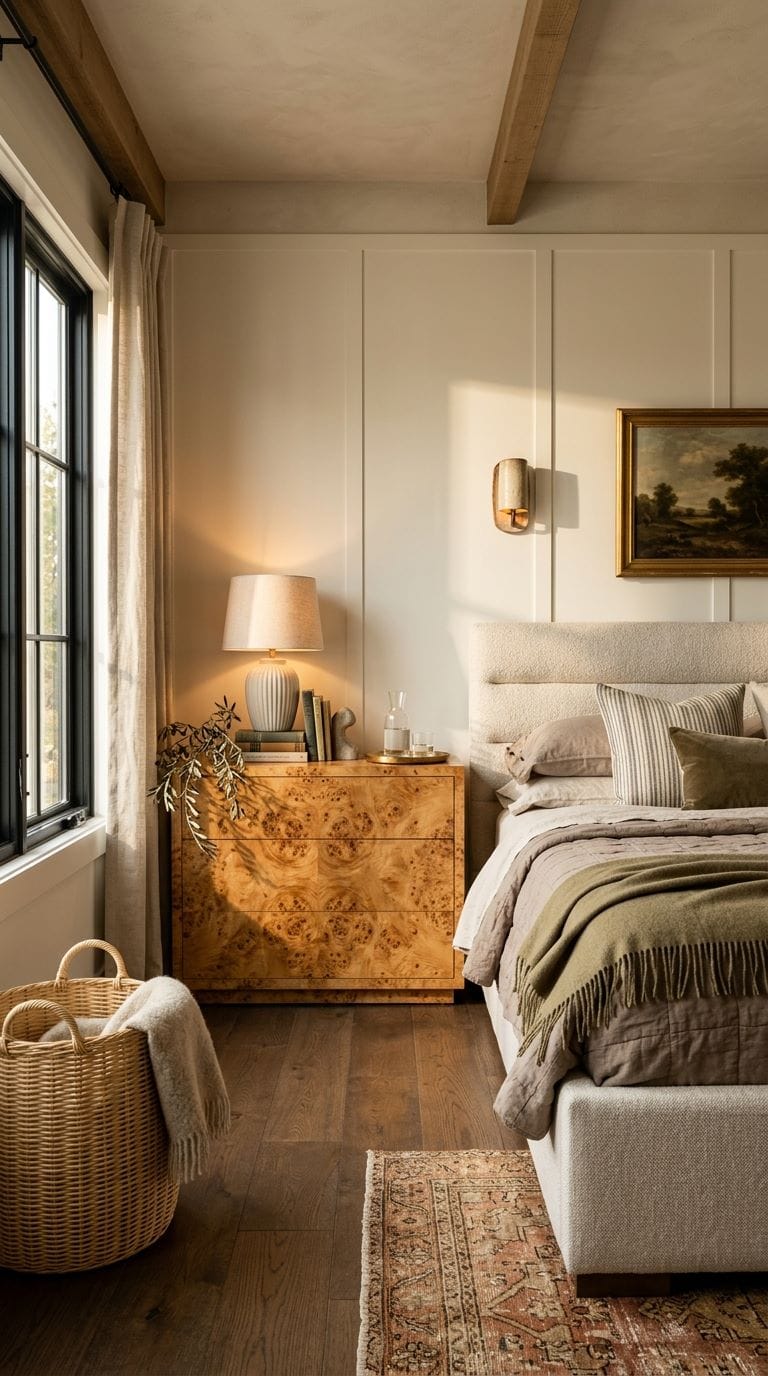
Not all vintage belongs. Burl wood does. The tight irregular grain makes it impossible to replicate, no two pieces look the same. A warm honey burl wood chest beside an upholstered bed in ivory, the chaotic surface set against a flat ground. A woven rattan floor basket in natural blonde in the corner.
Skip this: High-gloss lacquered nightstands. The finish dates the moment it chips.
Why Alabaster Lamps Replaced Brass Globes
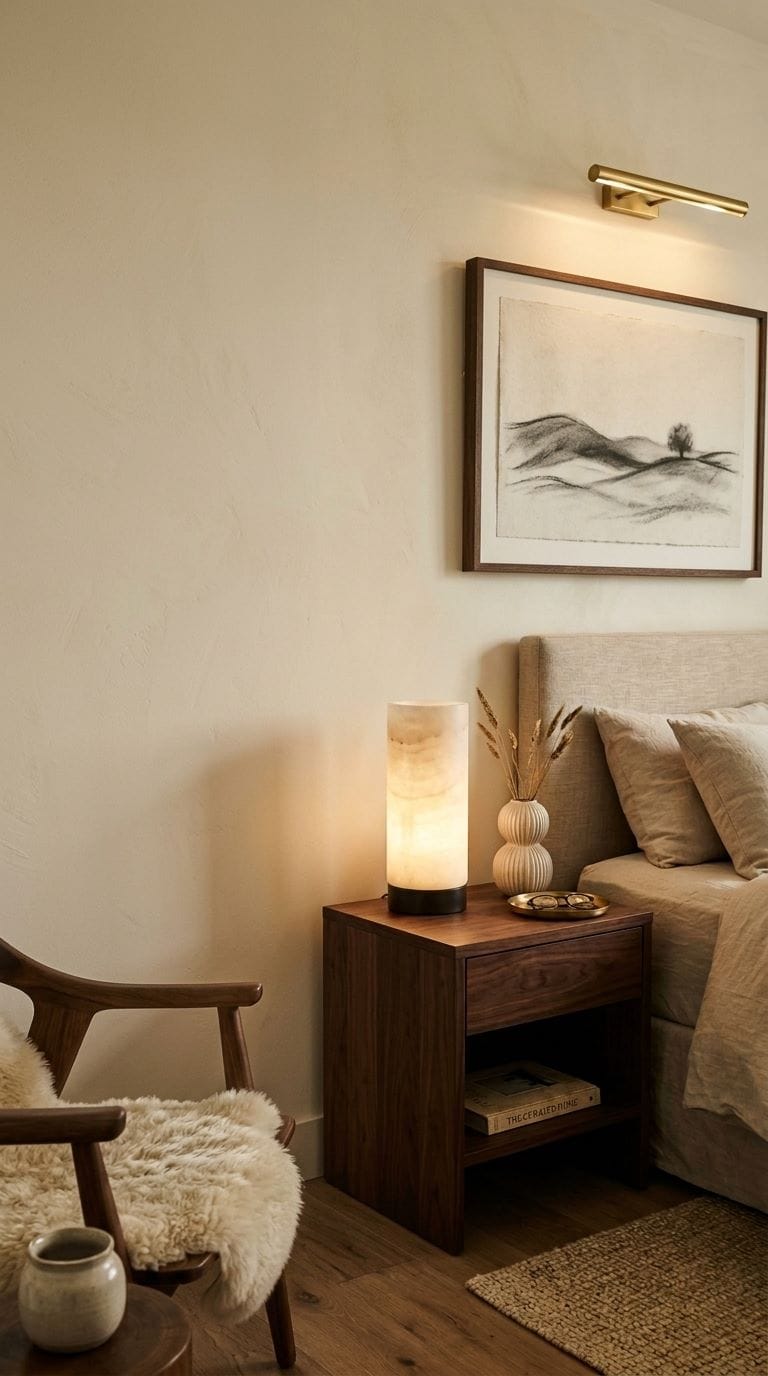
Brass globe sconces throw light outward. Alabaster reading lamps send it downward. Solid alabaster with an oil-rubbed bronze base. The move from metal to stone changes the texture mix in a way polished brass never does. An unlacquered brass picture light above the art, a narrow bar that washes the piece directly without adding glare to the sleeping zone.
The Color Palette That Won’t Look Dated in Five Years
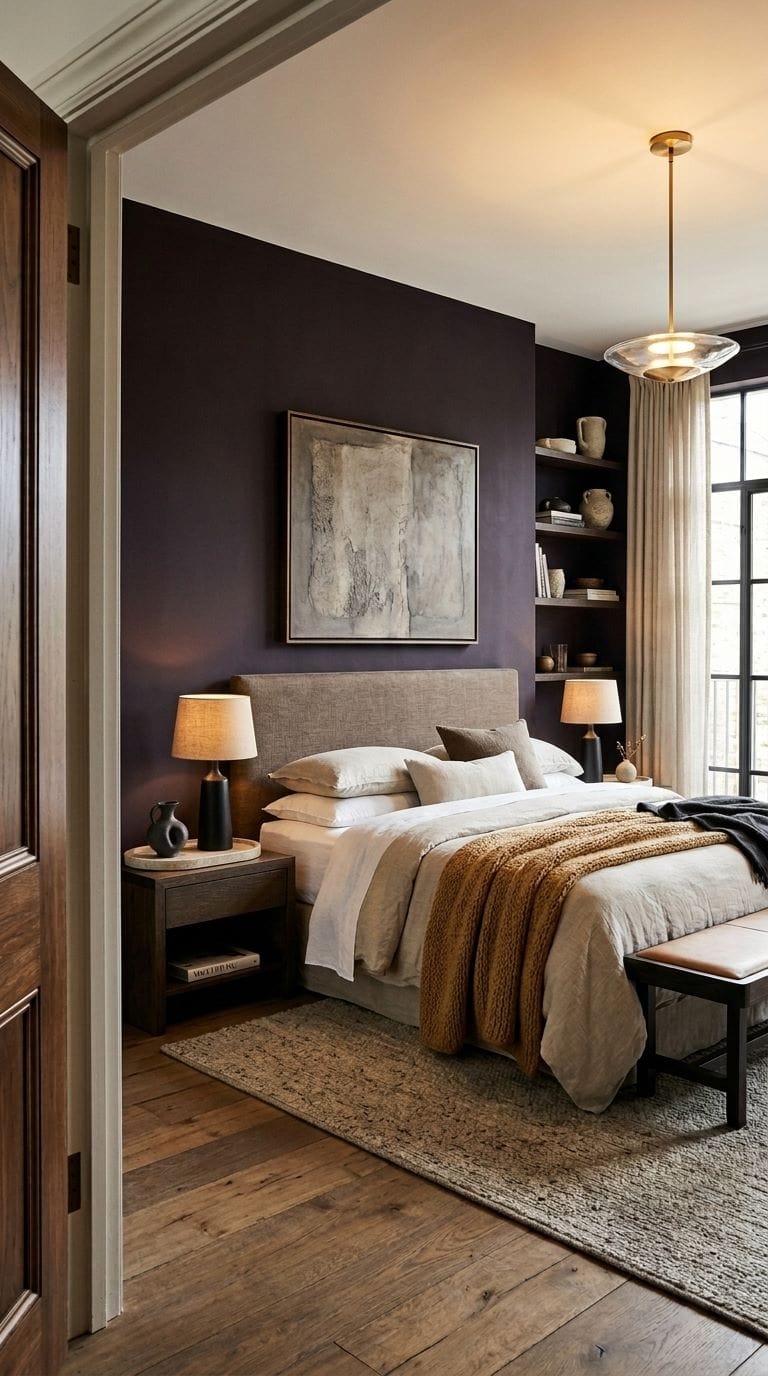
Deep aubergine behind the headboard. Crushed blackberry through bruised plum. At night it absorbs ambient light and removes the glare problem from the sleeping zone. In daylight it makes the raw textures in front of it stand out: unglazed travertine on the nightstand, ochre alpaca at the foot. The palette does something instead of just sitting there.
Save this palette. You’ll want it when you’re standing in the paint store.
Sophisticated bedroom ideas covers the darker end of this range in more detail.
The Romantic Bedroom That Doesn’t Look Fussy
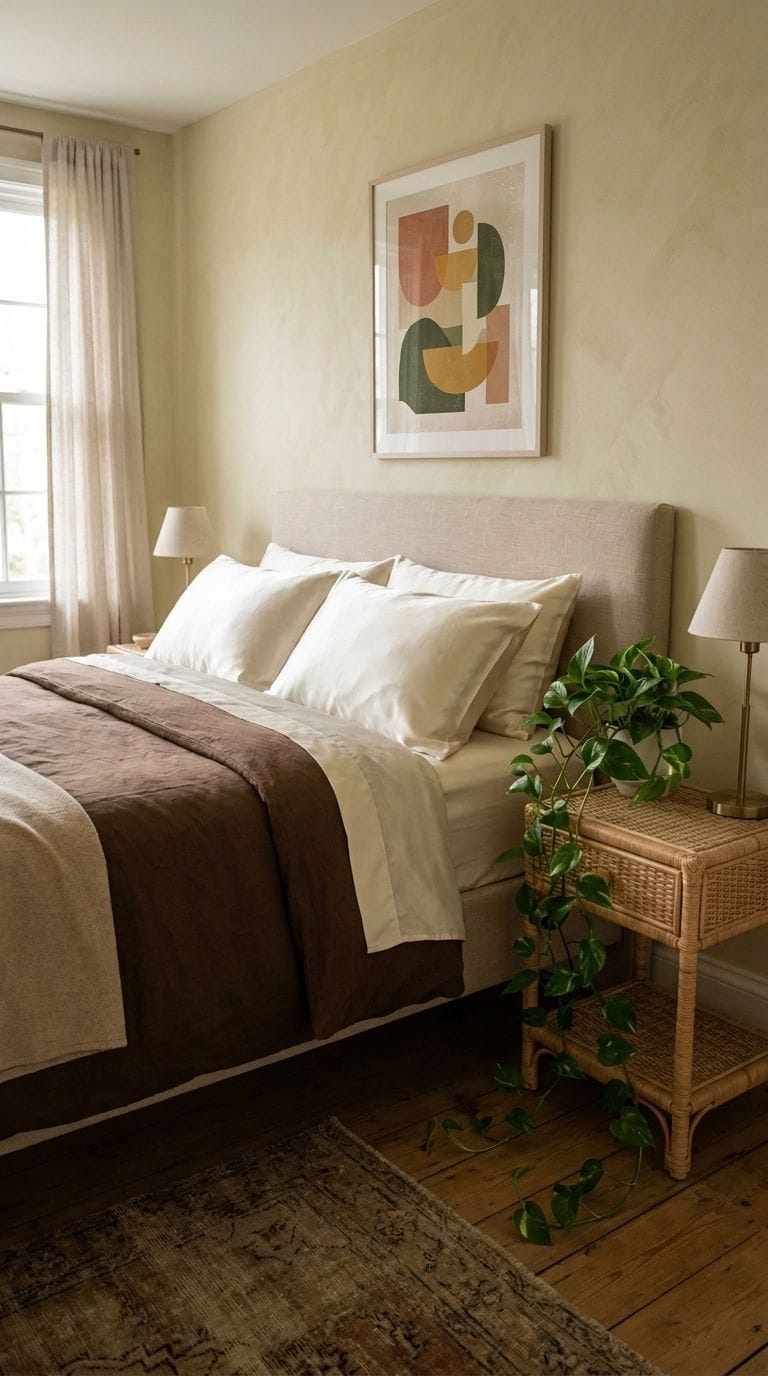
Romance in a bedroom doesn’t need accessories. Mulberry silk pillowcases in ivory against a heavyweight hemp-cotton duvet in tobacco brown. The high-sheen silk beside the coarse open weave is the romantic element. Trailing pothos cascades from the rattan side table. A heavy stoneware jug in unglazed terracotta on the floor.
What the Textile Layer Gets Wrong Most of the Time
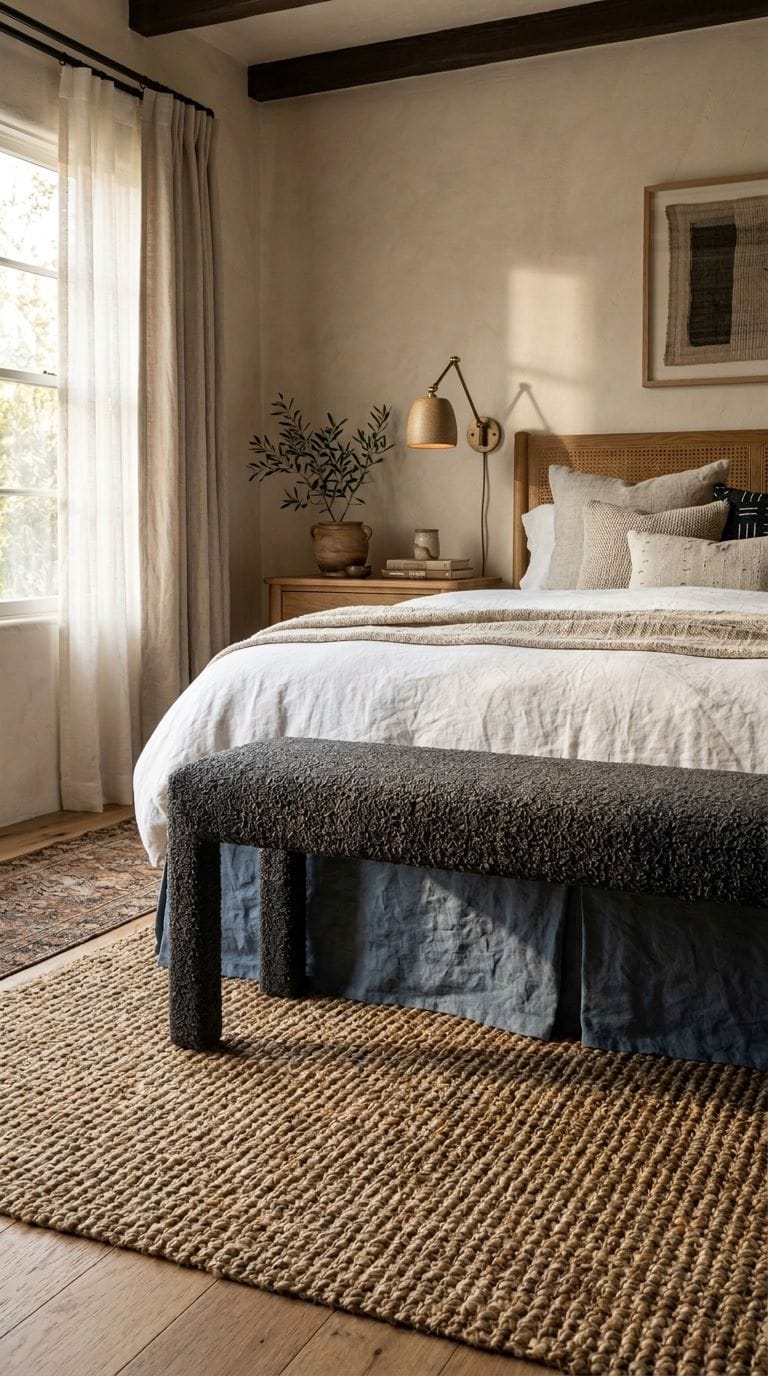
Same material temperature at every level makes a bedroom feel flat. Coarse jute rug at floor level, looped charcoal boucle bench at waist height, slate blue linen bed skirt at the mattress edge. Three different textures at three different heights. That’s the difference between a bedroom that holds visual interest and one that just has furniture in it.
How to Build the Bed Surround Without Buying New Furniture
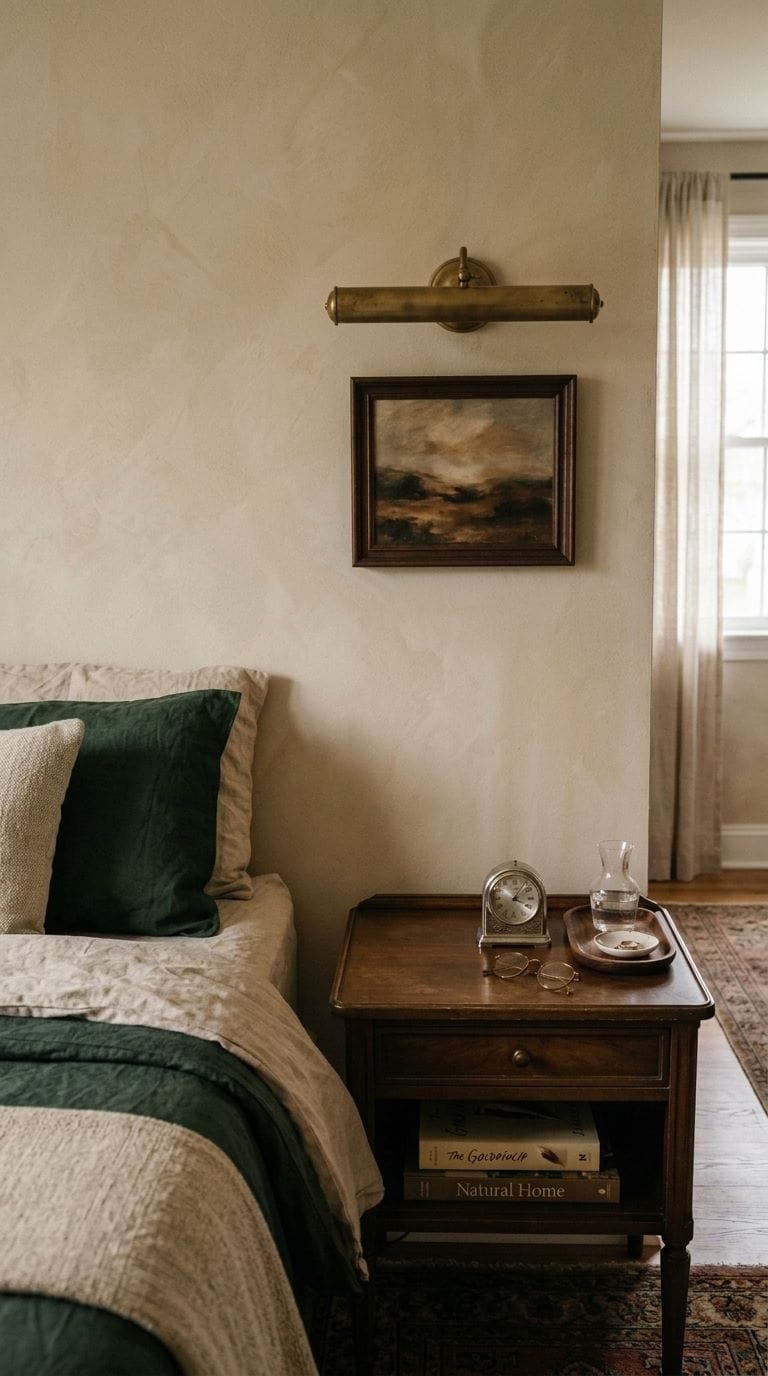
One floating oak ledge above the headboard, one framed piece on it. A seeded amber glass pendant nearby, suspended. An unlacquered brass picture light mounted to wash the art. Three objects, each doing one job. The headboard wall holds because nothing doubles up. Add a second hero element and the composition becomes a bulletin board.
Dark Furniture, Raw Materials: The Modern Version
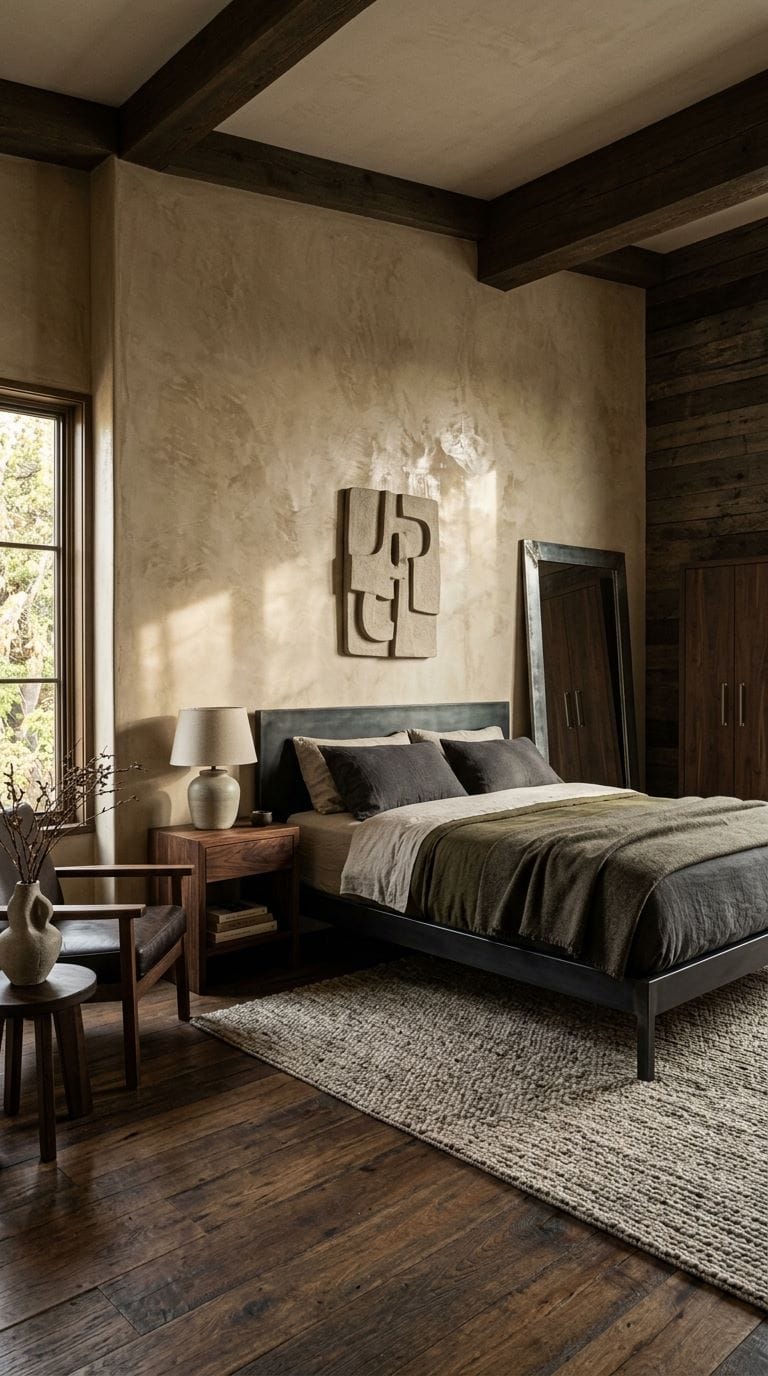
Organic modern traditional is not the same as farmhouse. A blackened steel bed frame against tadelakt walls, warm beige, soap-treated, seamless. Solid walnut nightstand beside it, dark chocolate and straight grain. Nothing painted, nothing distressed. A borosilicate carafe on the nightstand, clear glass with a blue rim. The room has physical weight that neutral bedrooms don’t.
Why Cane Replaced Tufting
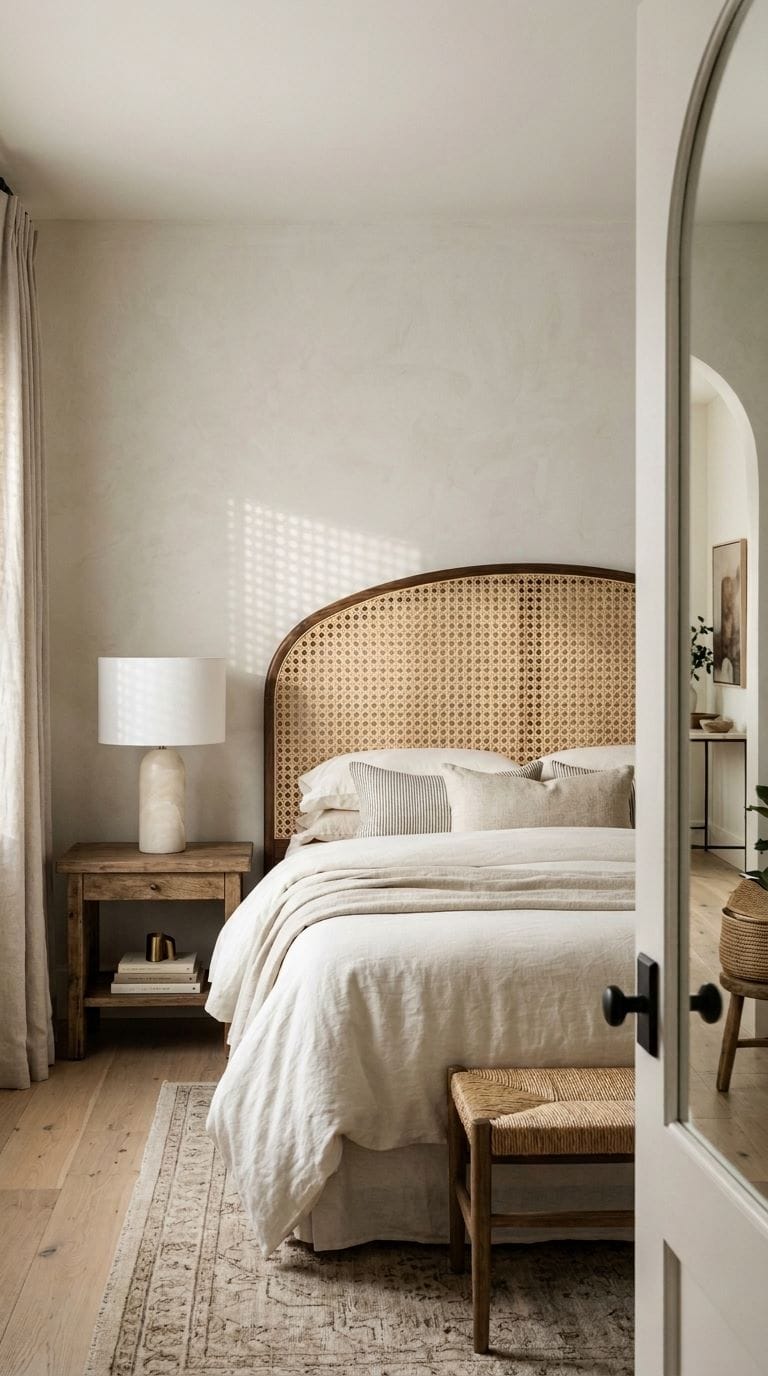
Tufted velvet headboards compress over time. The buttons pull, the pile flattens. Woven cane in blonde hex weave is the replacement: structural, open weave, already in its natural state when it arrives. Nothing to flatten or chip. It forces the bedding to carry the softness, which is where the investment should go anyway.
Design rule: Strip the headboard back. Invest in the textile layer, not the frame.
The Case for a Blue Bedroom That Won’t Date
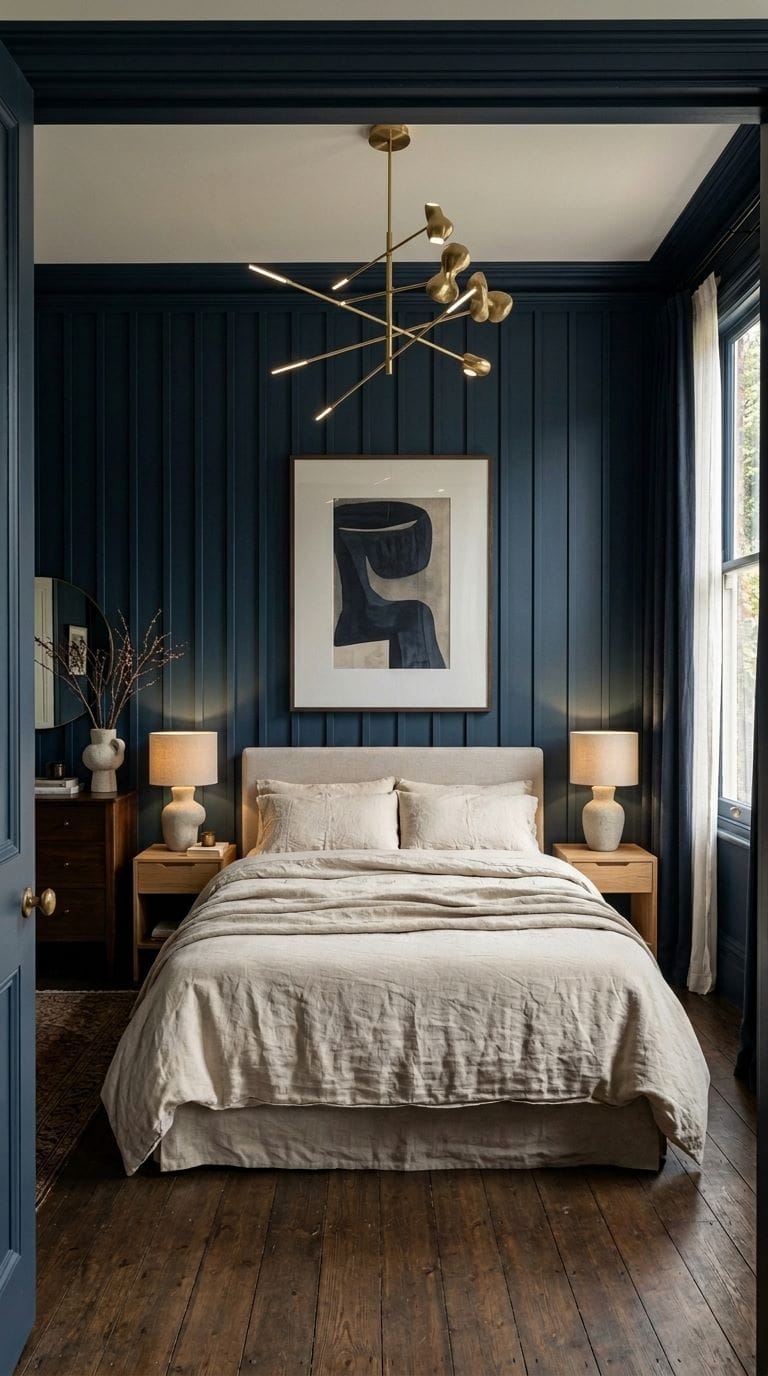
Blue holds when it’s architectural, not decorative. Board-and-batten panelling in moody navy on the full wall, smooth finish, full height. Against unbleached linen bedding and a warm unlacquered brass picture light, the navy looks grounded rather than themed. A wool loop-pile rug in oatmeal at the floor.
Design rule: When blue is the wall, keep every other surface within two tonal steps of warm white.
Three Objects, Zero Maintenance: Greenery That Works in a Bedroom
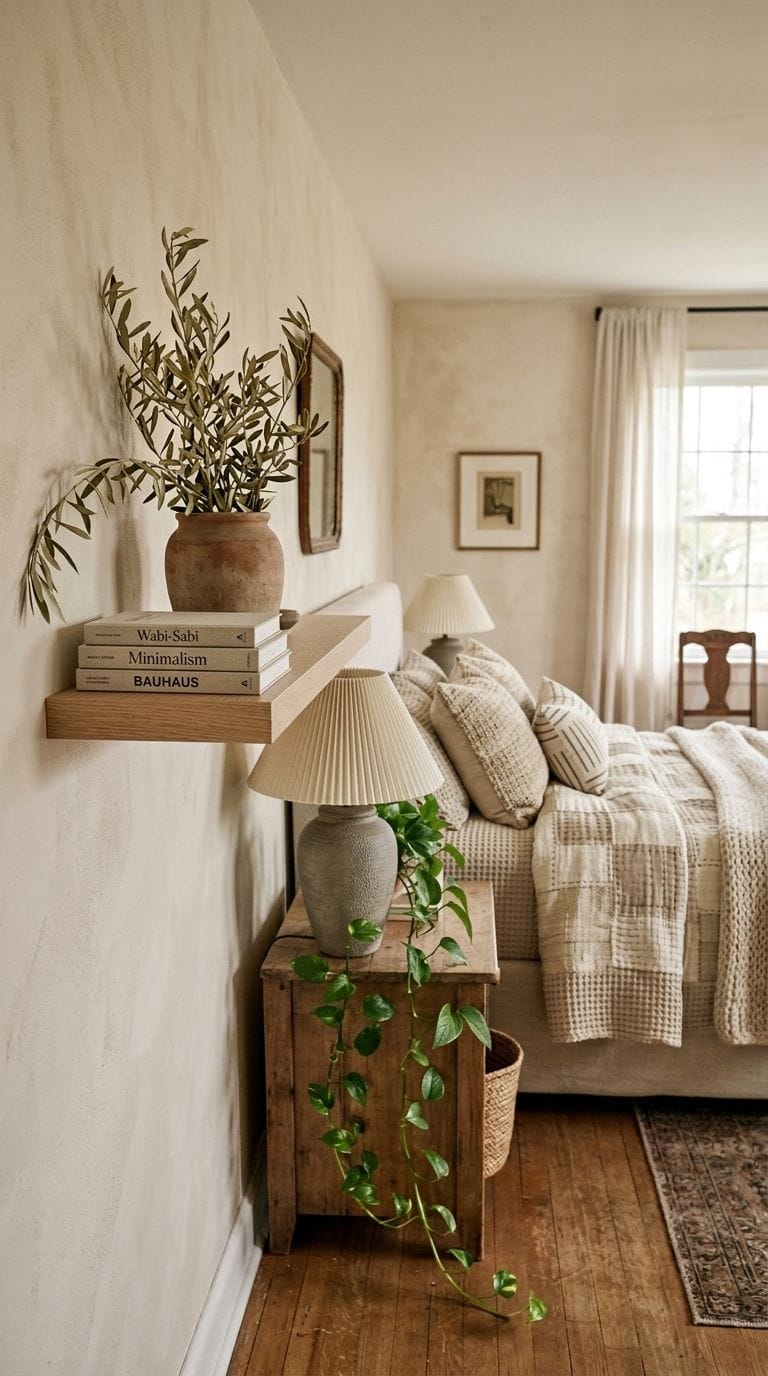
Live plants fail in bedrooms: overflow water damages wood and most species die in low light. Dried olive branches are the structure fix, pale green and brown, brittle, irregular form, stays unchanged for years. Preserved reindeer moss on the shelf beside them, deep green and spongy. One trailing pothos for the live element that genuinely holds up in low light.
Try this: One static, one fixed, one cascading. A fourth object collapses the shelf into a display.
Plant room ideas covers the room-scale version of the same approach.
The Floor Decision Most People Get Wrong
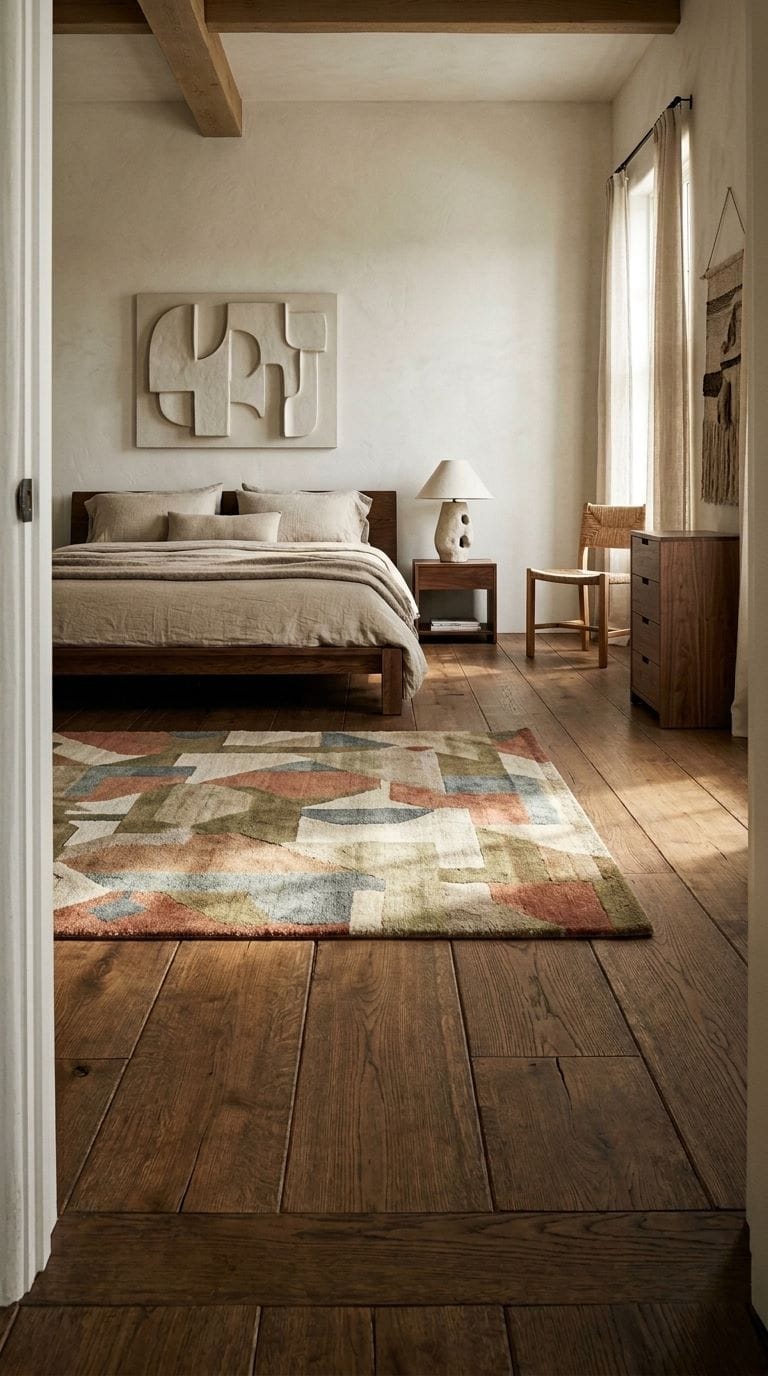
The floor sets the temperature of everything above it. Wide-plank European oak in fumed matte finish runs warm. Sisal broadloom in sand runs cooler and harder. Wool wall-to-wall in oatmeal quiets the room acoustically and sits between the two. Choose the floor before choosing the wall color. The wall corrects against the floor, not the other way around.